Complete Victorian Jewellery Guide
Part 1 of 3
Fashion and Society, 1830–1860
As industrialisation advanced, a growing part of society gained greater spending power. Fashion was no longer dictated exclusively by royal courts: the expanding middle classes and the newly wealthy increasingly influenced taste and consumption.
Women’s skirts became progressively wider and were often worn with large bonnets. The fashionable silhouette combined sloping shoulders with a very narrow waist. Jewellery could consequently become larger and heavier, complementing the increasing volume and visual impact of contemporary dress.
From Neoclassicism to the Empire Style
The eighteenth century in Europe ended amid the French Revolution of 1789–1799. Neoclassicism had become one of the dominant artistic movements of the period. Emerging during the mid-eighteenth century, it was inspired by archaeological discoveries in Italy and Greece, particularly the excavations at Herculaneum and Pompeii.
Architecture, interiors, fine art, fashion and jewellery all drew heavily upon the rediscovered visual language of ancient Greece and Rome. Classical figures, laurel wreaths, urns, palmettes and other archaeological motifs appeared throughout the decorative arts. The style remained influential after the Revolution and developed into the more formal Empire style during the reign of Napoleon.
From the late 1790s until 1815, Europe was repeatedly affected by the French Revolutionary and Napoleonic Wars. Following Napoleon’s defeat, the Bourbon monarchy was restored in France, first in 1814 and again in 1815 after the Hundred Days. Members of the old aristocracy returned to court, although European society had been permanently changed by the Revolution and the wars.
Earlier jewellery was frequently dismantled, reworked or reset during these years. Older gemstones could be incorporated into new Empire or Restoration-period designs, while surviving pre-Revolutionary jewels were adapted to suit changing fashions.
In the difficult economic years following the wars, diamonds and valuable coloured stones such as rubies, emeralds and sapphires remained beyond the reach of many buyers. Less costly gemstones therefore became increasingly important in fashionable jewellery. Brazil supplied large quantities of topaz, amethyst, citrine, chrysoberyl and aquamarine. Many of these stones were mounted in decorative gold settings incorporating fine wirework and scrolls, a technique known as cannetille.
Cannetille
During the early nineteenth century, the high cost and limited availability of gold encouraged jewellers to use the metal as economically as possible. Older pieces were often dismantled, their gemstones removed and their gold melted down for reuse. The metal could then be drawn into very fine wire or rolled into narrow strips.
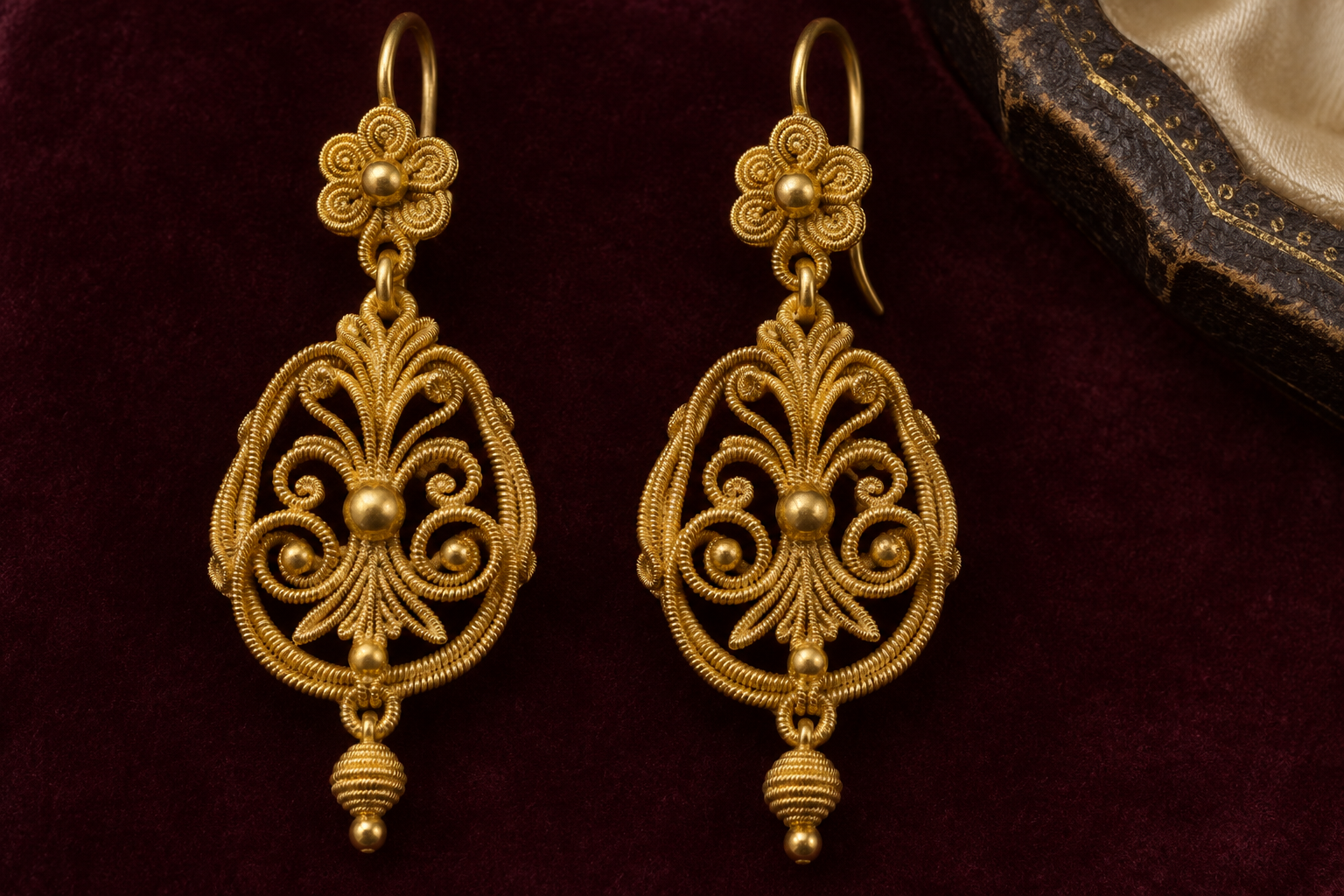
Cannetille jewellery was made from delicate coils, spirals, scrolls and rosettes of gold wire or thin metal strip. Its appearance resembles embroidery or fine threadwork, and the technique allowed jewellers to create ornaments that looked substantial while using relatively little gold.
Cannetille became fashionable across Europe. In the Netherlands it was also employed in regional jewellery worn with traditional dress, including ornaments associated with Zeeland, West Friesland, Drenthe and Groningen. Brooches, earrings and pins made in this technique could appear impressively large while remaining comparatively lightweight.
The work was highly labour-intensive. As industrial production developed, pressed and stamped metalwork offered a faster way to create ornaments with a similar economy of material. Cannetille gradually declined in mainstream urban jewellery during the 1830s and 1840s, although traditional goldsmiths and silversmiths continued to use it in regional jewellery well into the later nineteenth century and, in some areas, the early twentieth century.
Industrialisation and Pressed Metalwork
One of the techniques that increasingly replaced labour-intensive wirework was mechanical stamping. Like cannetille, pressed metalwork reduced the quantity of precious metal required, but it also lowered labour costs and made larger-scale production possible.
A thin sheet of metal was pressed between two corresponding dies: one carrying a raised design and the other its recessed counterpart. The metal took on the desired relief and was then carefully cut, assembled and finished. The closer the two surfaces of the relief, the less metal was required.
This process allowed ornaments to be made much more quickly from a similar quantity of gold. Links for necklaces and bracelets, for example, could be produced from stamped components. The technique did not always result in jewellery of the highest quality. Hollow or very thin ornaments were vulnerable to denting, and many surviving examples show signs of damage caused by their lightweight construction.
The Later Biedermeier and Early Victorian Period, c. 1840–1860
The Biedermeier period is generally associated with the years between the Congress of Vienna in 1815 and the revolutions of 1848. During the 1840s, improving economic conditions in many parts of Europe encouraged renewed demand for jewellery.
The pressure on existing supplies of gold led to the continued dismantling and melting down of older pieces. This helps to explain why jewellery made before approximately 1830 is now comparatively rare: many pieces were altered, broken up or reused by later generations.
The discovery of gold in California in 1848 and in Australia in 1851 greatly expanded the international supply of the metal. The resulting gold rushes brought substantial new quantities of gold onto world markets and gradually made the material more widely available to European manufacturers.
At the same time, entrepreneurs continued to search for less expensive methods of producing jewellery. Birmingham, one of the principal centres of British metalworking, played an important role in this development. In 1840, John Wright developed a practical cyanide-based electroplating process. The Elkington firm acquired and commercialised the method, enabling manufacturers to deposit a thin layer of gold or silver onto less expensive base metals. Electroplating greatly expanded the market for jewellery that had the appearance of precious metal at a much lower cost.
Queen Victoria and ‘Victorian’ Jewellery
Britain experienced enormous industrial and commercial expansion during much of the nineteenth century. Unlike many parts of continental Europe, the country had not been occupied by Napoleon. Industrialisation, international trade and the resources drawn from the British Empire contributed to considerable national wealth, which was reflected in the production and consumption of jewellery.
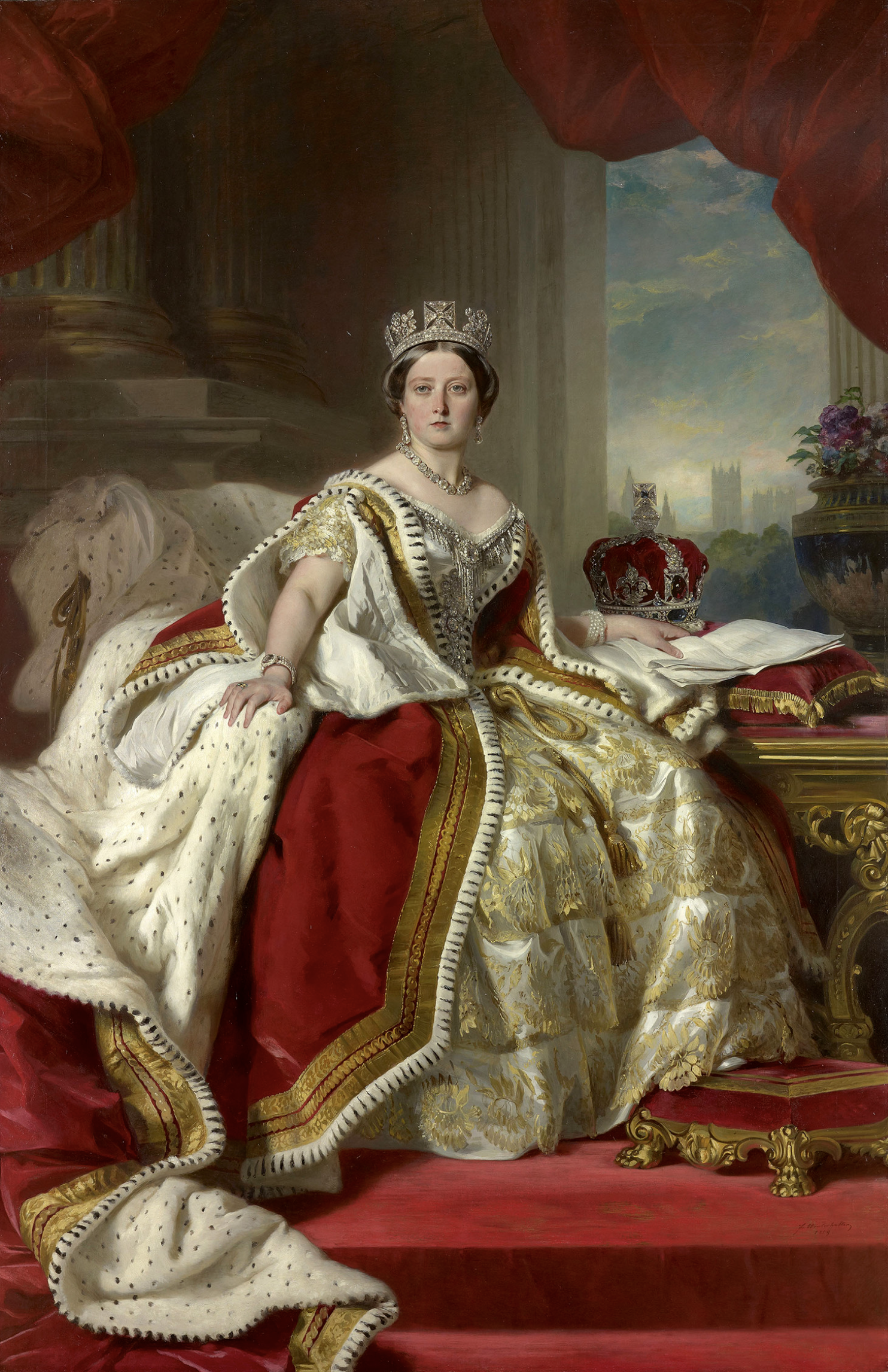
Victoria succeeded to the British throne in 1837 at the age of eighteen and was crowned in 1838. During her long reign, she exerted a powerful influence on fashion, jewellery and social customs, first in Britain and subsequently across much of Europe. Members of the aristocracy and the prosperous middle classes followed the young queen’s tastes, and these fashions were widely reproduced and adapted.
The term Victorian is still frequently used in the jewellery trade for nineteenth-century pieces, even when they were made outside Britain. Strictly speaking, however, Victorian jewellery refers to British jewellery produced during Victoria’s reign, from 1837 to 1901. Continental pieces are often described more accurately by their country of origin, date and stylistic movement.
Queen Victoria married Prince Albert in 1840. They had nine children, most of whom married into European royal or aristocratic families. These dynastic connections helped spread British court fashions and reinforced Victoria’s wider cultural influence.
Hair Jewellery
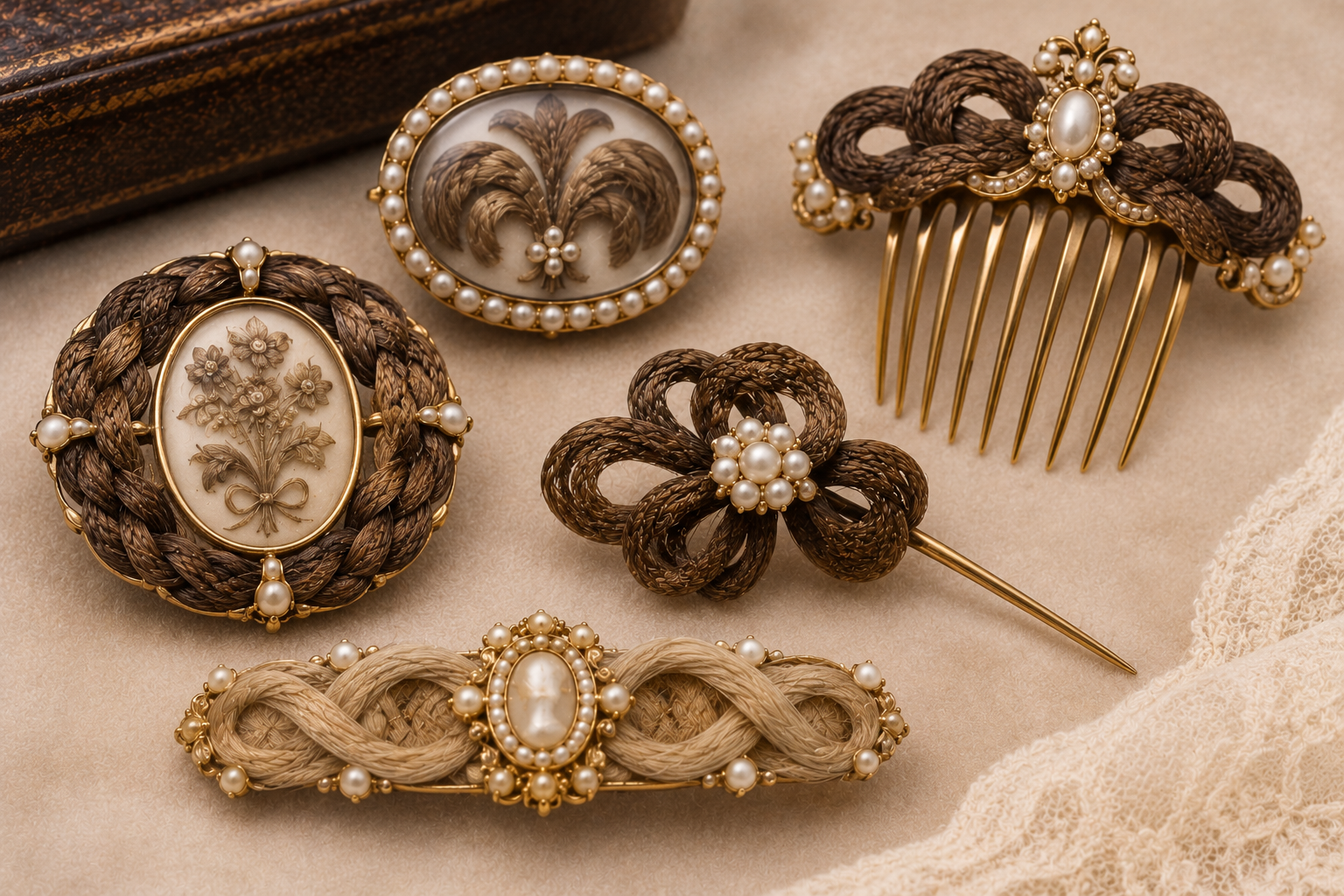
Hair jewellery incorporates human hair into an ornament. Although the practice had much earlier origins, it became particularly popular during the eighteenth and nineteenth centuries. Hair could be plaited into chains and bracelets, placed beneath glass or arranged into tiny pictorial compositions.
By the late eighteenth and early nineteenth centuries, hair was frequently used in sentimental and mourning jewellery. Miniature scenes often depicted a tomb, an urn on a pedestal, a weeping willow or a grieving figure. These images commemorated a deceased relative or loved one.
Not all hair jewellery was associated with death. A lock from a living husband, wife, child or friend could serve as a deeply personal token of affection. A mother might commission a piece containing hair from several of her children, while lovers exchanged rings, lockets or bracelets as intimate keepsakes.
The techniques varied according to the type of object. Hair intended for woven work was cleaned, sorted and prepared before being plaited around forms or worked on a table. For pictorial compositions, finely cut hair could be arranged on a prepared ground of ivory, bone or paper and secured with an adhesive. The design was then placed beneath glass.
This highly specialised work was often undertaken by professional hair artists rather than by the goldsmith alone. Customers were sometimes concerned that their hair might be substituted in the workshop, and some makers advertised guarantees that the original material would be returned in the finished jewel. Horsehair was also used in certain constructions where a stronger or more resilient material was required.
Hair jewels can sometimes be dated with unusual accuracy because they may include a name, initials or the date of a death. Their popularity varied throughout the century, but mourning jewellery experienced a major revival after Prince Albert’s death in 1861, when Queen Victoria entered a prolonged period of mourning.
Pietra Dura and Micromosaic Jewellery
Two distinct Italian techniques are often grouped together under the broad description of mosaic jewellery: pietra dura and micromosaic.
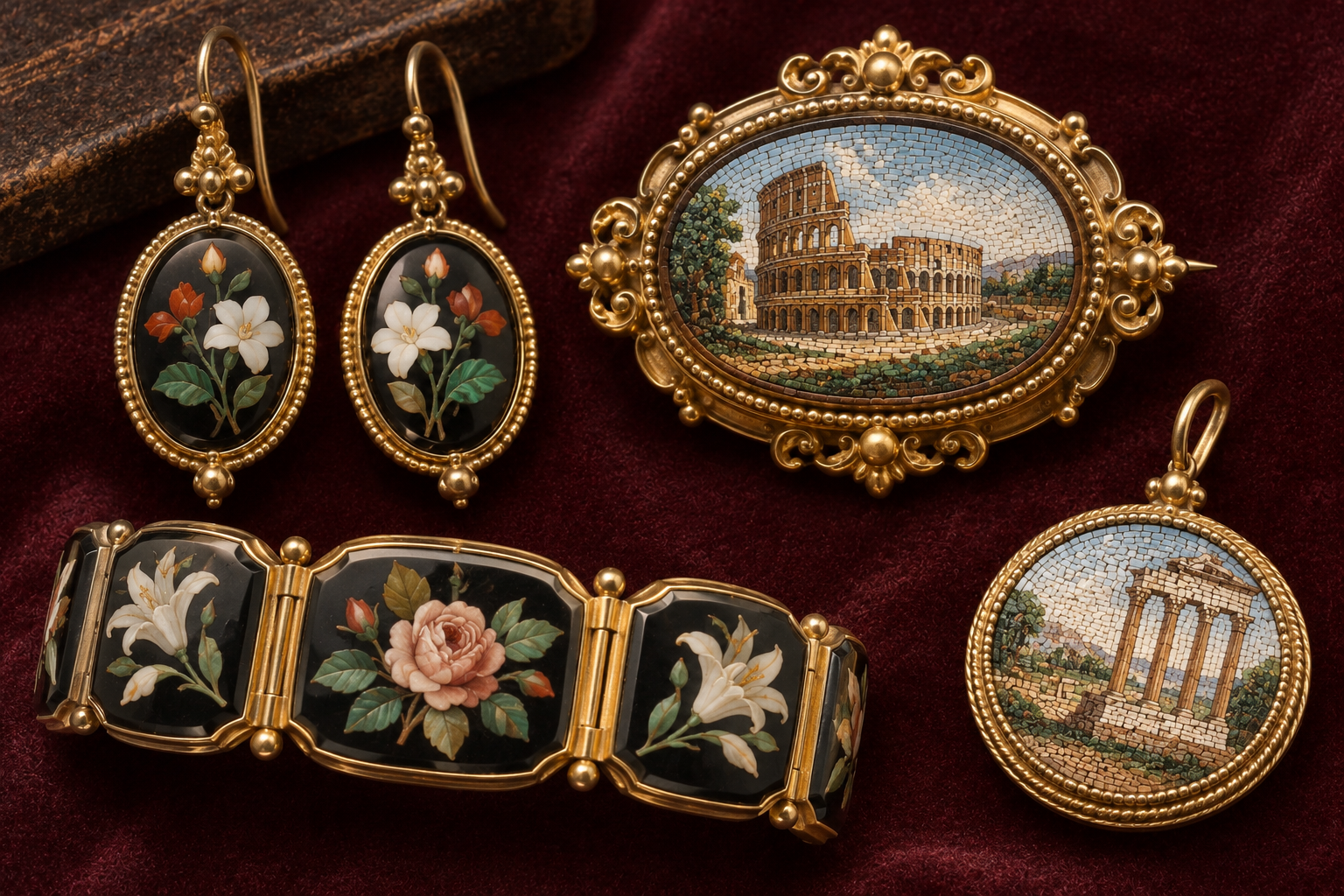
Pietra dura, also known as commesso, is made by fitting precisely cut pieces of coloured hardstone together to form an image. Materials can include agate, jasper, chalcedony and other decorative stones. Micromosaics, by contrast, are composed of extremely small pieces of coloured glass, known as tesserae. When carefully assembled, they create detailed miniature scenes.
Both techniques were used to depict architecture, landscapes, flowers, animals and classical subjects. The finished panels were mounted as brooches, rings, pendants and earrings, sometimes within stamped gold or cannetille borders. Complete parures could also be made from a coordinated series of panels.
As European travel became more accessible to wealthy families, Italy became one of the most important destinations on the Grand Tour. Travellers purchased local jewellery as evidence of their education and cultural journey. Views of Roman monuments, Italian landscapes and famous works of art were especially popular souvenirs.
The popularity of these ornaments led to production outside Italy. Similar jewellery was made in Britain, France, the United States and Switzerland. Swiss examples often featured Alpine landscapes or figures in regional dress. Consequently, not every nineteenth-century mosaic jewel is necessarily Italian, even when its design reflects the traditions of the Grand Tour.
Long Chains and the Later Sautoir
Long chains were an important element of nineteenth-century dress. They could be described as guard chains, muff chains or dress chains, depending on their form and use. They were worn in a single long loop, doubled around the neck or arranged across the bodice.
A watch, locket, seal, tassel or other pendant could be suspended from the end. Many examples incorporated a movable slide that allowed the length and arrangement of the chain to be adjusted.
Relatively few very long nineteenth-century chains have survived in their original form. Later owners often shortened them or divided them into two or more necklaces, making complete examples increasingly uncommon.
The term sautoir became especially associated with the long necklaces fashionable during the late nineteenth and early twentieth centuries. Sautoirs reached a new height of popularity during the Art Deco period, when long necklaces of platinum, diamonds, pearls and coloured gemstones were worn with tassels or detachable pendants. Fine examples continue to appear in major jewellery auctions in London, Geneva and New York.
The Chatelaine
The chatelaine had been worn for centuries, primarily because of its practical function. A nineteenth-century chatelaine generally consisted of a decorative plate, hook or clip in gold, silver or base metal, from which several short chains were suspended.
Everyday examples carried useful objects such as scissors, a thimble, a needle case, a small knife or keys. More elaborate versions might support a watch and its key, a seal, a pencil case, a vinaigrette or other personal accessories.
Chatelaines intended for wealthy owners could be made in gold and richly decorated with enamel, engraving, gemstones or diamonds. They combined ornament with utility and often reflected both the social status and daily responsibilities of the wearer.
Seed-Pearl Jewellery
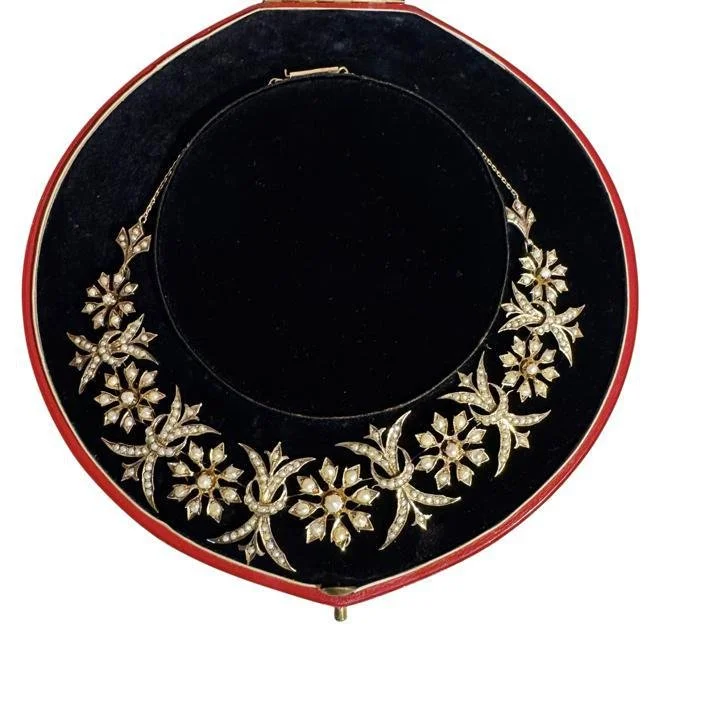
Jewellery made with seed pearls became especially fashionable during the early nineteenth century and remained popular for much of the century. Seed pearls are extremely small natural pearls, often pierced and threaded in large numbers onto delicate frameworks.
Designs frequently took the form of branches, flowers, leaves, bells or scrolling ornaments. Because the pearls were so small, horsehair was often used as the threading material. This gave the jewel flexibility but also made it fragile. Once the hair breaks or deteriorates, restoration can be extremely difficult.
Alongside tiny seed pearls, jewellers also used somewhat larger natural freshwater pearls. These came from pearl mussels living in rivers and lakes rather than from marine oysters. Historically, freshwater pearls were collected in northern England, Scotland, the Danube and other European river systems.
Natural freshwater pearls were never cultivated in the modern sense. The search for them was destructive because opening a mussel generally killed it, while only a very small proportion contained a commercially useful pearl. Over-collection, together with pollution and habitat loss, caused serious declines in many freshwater pearl-mussel populations.
Cultured freshwater pearls were developed and produced on a significant scale during the twentieth century. The term freshwater pearl can therefore refer either to rare natural river pearls found in historic jewellery or to later cultured pearls, and the distinction is important when describing an antique piece.
Enamelling
Enamel is a glass-based material coloured with metallic oxides. The finely ground glass is applied to a metal surface and heated in a kiln until it melts and fuses to the object. After cooling, further layers or colours can be added.
Complex painted enamel may require numerous firings because different colours soften or melt at different temperatures. The maker must carefully control the order in which the colours are applied. The reverse of a thin metal panel is often counter-enamelled to balance the tension created during firing and reduce the risk of warping.
Enamel became an important feature of nineteenth-century jewellery and watch cases. Geneva was one of Europe’s principal centres for highly accomplished enamel painting. Between approximately 1820 and 1840, romantic subjects such as Swiss landscapes, children, St Bernard dogs and figures in regional costume were particularly popular.
The Gothic Revival in Jewellery, c. 1825–1855
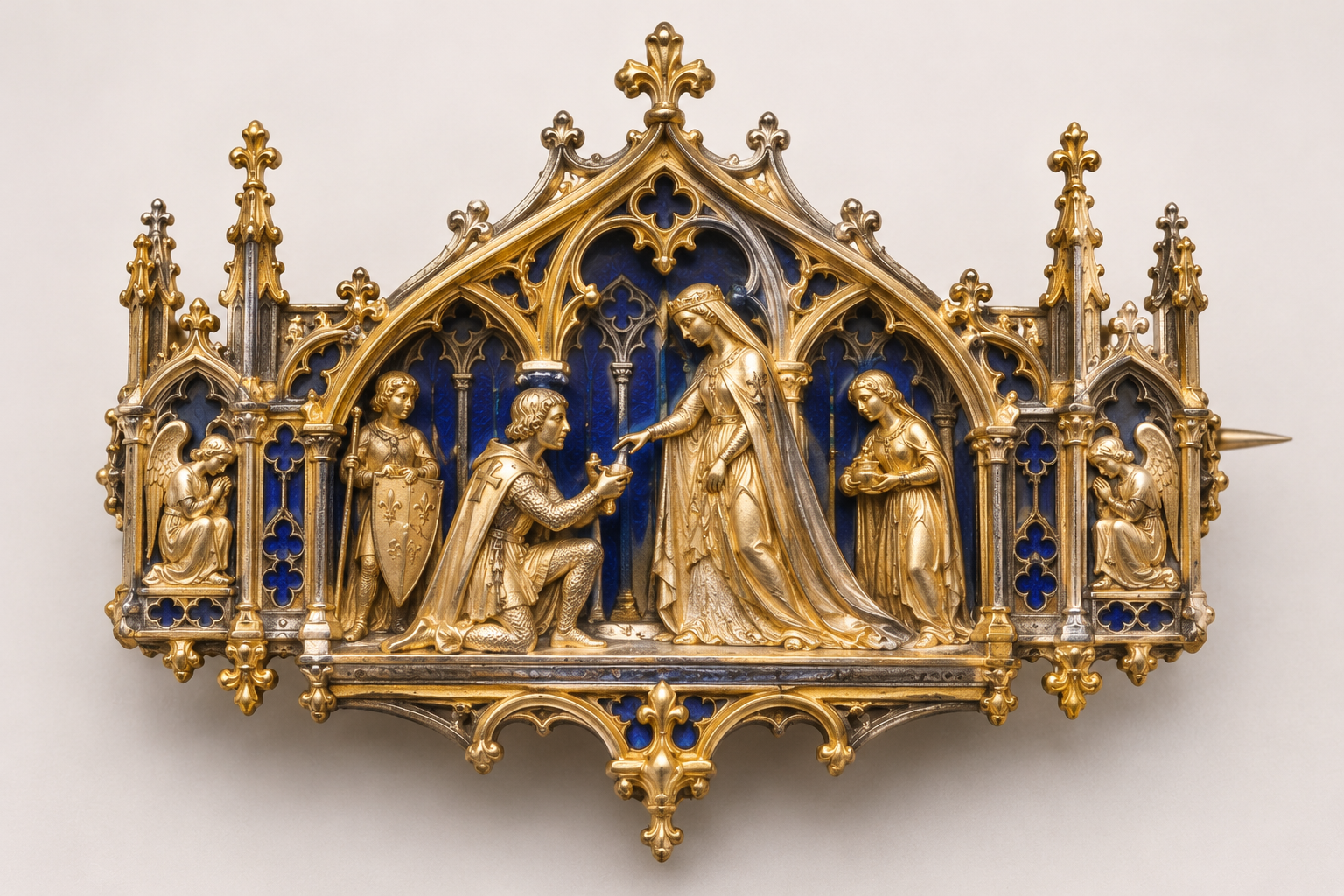
After Napoleon’s defeat, many designers looked beyond the formal language of the Empire style and Neoclassicism in search of new sources of inspiration. The Middle Ages and the Renaissance were reimagined through a romantic nineteenth-century lens, giving rise to a wide range of historical revival styles.
Goldsmiths drew inspiration from Gothic architecture, sculpture, illuminated manuscripts and ecclesiastical art. Pointed arches, tracery, quatrefoils, crockets and stained-glass windows were adapted for pendants, necklaces, brooches and rings. Some jewels resemble miniature architectural structures rather than surviving medieval ornaments.
Because relatively little medieval jewellery was readily available for study, designers often created imaginative interpretations instead of exact copies. Gothic Revival jewellery became particularly fashionable from the 1830s into the 1850s. Comparatively few examples have survived intact.
The Renaissance Revival in Jewellery, c. 1840–1900
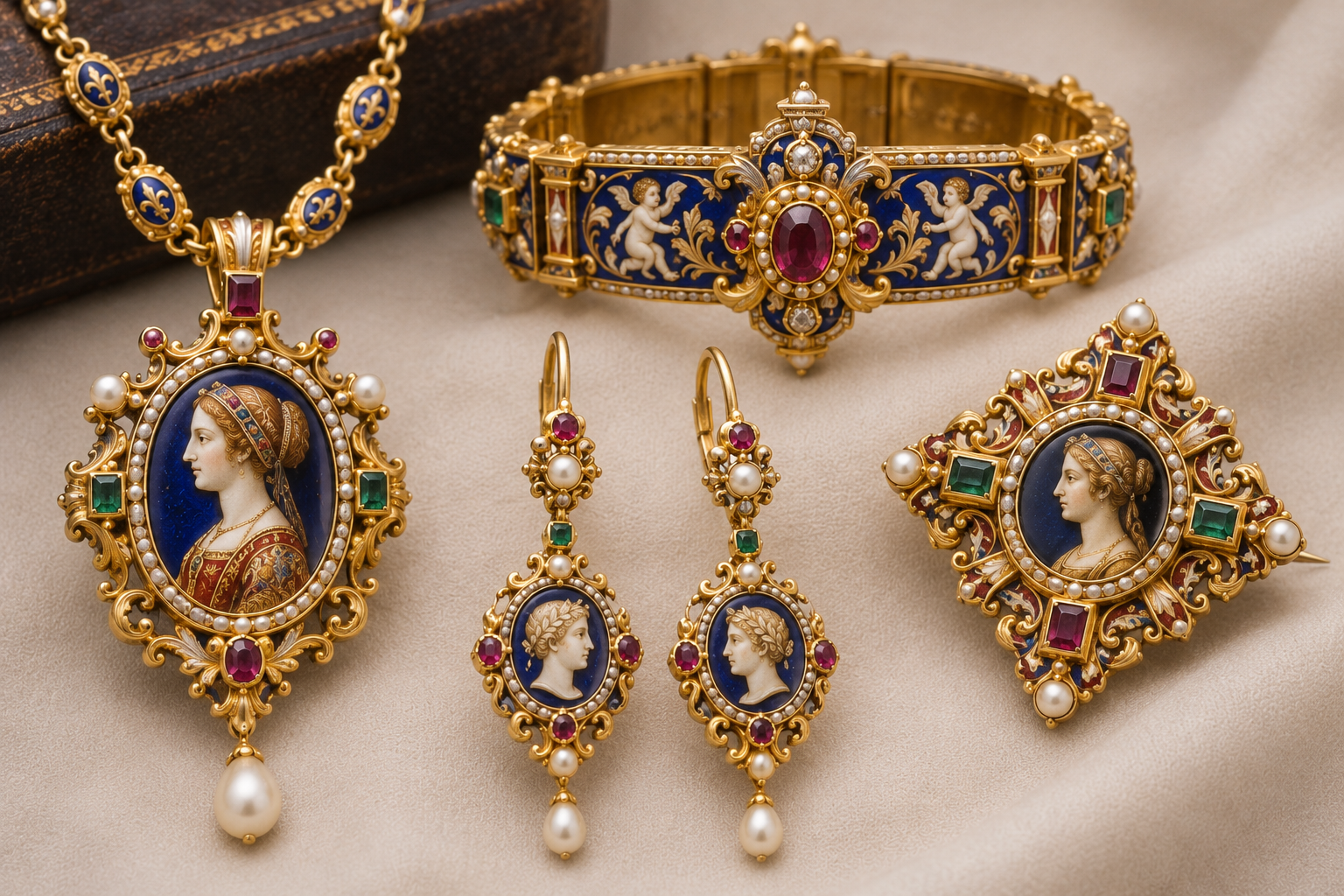
The Gothic Revival was followed and accompanied by a renewed interest in the Renaissance. Designers approached the sixteenth century through the same romantic and historicist perspective.
In this case, jewellers had access to a larger number of surviving Renaissance objects, as well as printed ornament books and engraved designs from the fifteenth and sixteenth centuries. Reissued publications circulated throughout Western Europe and offered goldsmiths a rich visual vocabulary of scrollwork, grotesques, mythological figures, architectural frames and colourful enamel.
Some nineteenth-century Renaissance Revival jewels were so convincingly made that they were later mistaken for genuine Renaissance objects. Technical and scientific examination has led museums to reattribute a number of pieces that were once believed to be several centuries older.
Important designers associated with the style included François-Désiré Froment-Meurice, Eugène Fontenay, Carlo Giuliano and, later, Giuliano’s sons, as well as Alphonse Fouquet. Their work combined historical motifs with the technical sophistication and rich colouring of nineteenth-century jewellery. By the 1860s, interest in the Renaissance Revival had reached a high point, and fine examples remain highly sought after.
The Etruscan Revival in Jewellery, c. 1850–1890
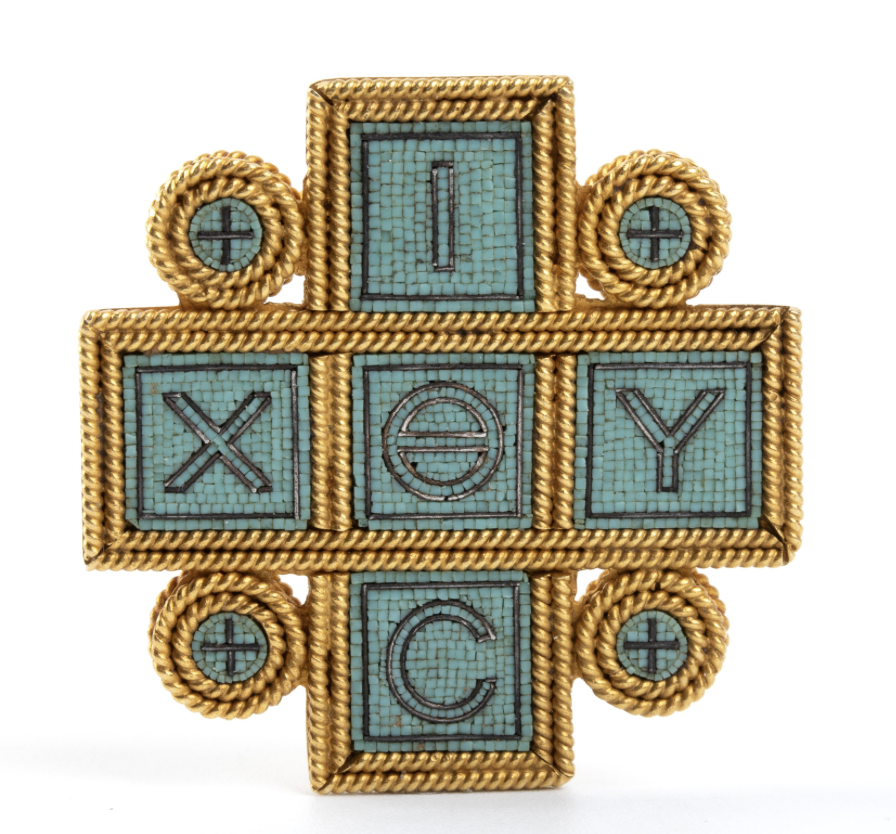
One of the most influential figures in Etruscan Revival jewellery was the Roman goldsmith Fortunato Pio Castellani (1794–1865), working with his sons Alessandro and Augusto. The family was fascinated by ancient Etruscan goldwork, which became increasingly visible through archaeological excavations and important discoveries in Italy.
Castellani and his workshop studied ancient ornaments closely and attempted to recreate their distinctive techniques, particularly fine filigree and granulation. The precise methods used by ancient Etruscan goldsmiths were not simply preserved unchanged in rural workshops; instead, nineteenth-century makers developed their own experimental processes in an effort to reproduce the visual effect of the originals.
Through connections with archaeologists, collectors and the Roman art market, the Castellani family had access to ancient jewellery that could be studied and adapted. Their work ranged from close archaeological interpretations to more imaginative nineteenth-century compositions inspired by antiquity.
The Castellani family also assembled an important collection of ancient jewellery. A substantial group of antiquities connected with Alessandro Castellani entered the British Museum during the 1870s and remains an important part of its collection.
Etruscan Revival jewellery initially followed ancient examples quite closely, but the style gradually developed a recognisably nineteenth-century character. By the 1860s it had become highly fashionable among affluent European women, and archaeological-style goldwork remained popular for several decades.
Assyrian Revival Jewellery, c. 1849–1870
The excavation of the ancient Assyrian city of Nineveh, near modern Mosul in Iraq, introduced European audiences to an unfamiliar visual culture of monumental reliefs, winged figures, rosettes and stylised animals.
Sir Austen Henry Layard published Nineveh and Its Remains in 1849. The book brought the discoveries to a wide public and reproduced Assyrian architecture, sculpture, ornament and dress. Designers rapidly adapted these newly available patterns for jewellery and the decorative arts.
Assyrian Revival jewels incorporated motifs derived from excavated reliefs and ancient Near Eastern ornament. Interest was strongest from the 1850s into the 1870s, forming part of the broader nineteenth-century fascination with archaeology and historical revival styles.
Surface Enrichment of Gold
A further technique used during the nineteenth century was the chemical enrichment of a gold alloy’s surface. A gold object was treated in a corrosive solution that removed some of the copper, silver or other alloying metals from its outermost layer.
This left a thin surface with a higher concentration of gold, producing a richer colour and the appearance of a higher-carat alloy. The technique was particularly effective on archaeological-style jewellery and was frequently associated with Etruscan Revival work.
Because the enriched layer is very thin, vigorous polishing can remove or substantially alter it. Historic pieces with this surface treatment should therefore be handled and restored with particular care.
Cameos
Cameos returned to widespread fashion during the late eighteenth and nineteenth centuries, encouraged by Neoclassicism, archaeological interest and travel to Italy. Many nineteenth-century cameos were carved from layered shells, particularly helmet and conch shells.
Naples and nearby Torre del Greco became important centres of shell and coral carving. The natural layers of the shell usually consist of a pale cream or white upper layer over a reddish, orange or brown ground, although some shells were also coloured or treated. Suitable shells were imported from the Caribbean and other warm-water regions.
A blank was cut from the curved shell and attached to a support for carving. The design was drawn on the pale upper layer, which was then carefully removed around the figure with small cutting tools. This exposed the darker layer beneath and left the image standing in relief. The finished cameo was polished to emphasise the contrast between the light figure and the coloured background.
Classical mythology provided many of the most popular subjects, including Zeus, Athena, Mars, Diana and Venus. Portraits, historical figures and genre scenes were also represented. Cameos were additionally carved from blood coral and other materials.
‘Dieppe’ Cameos and Relief Jewellery
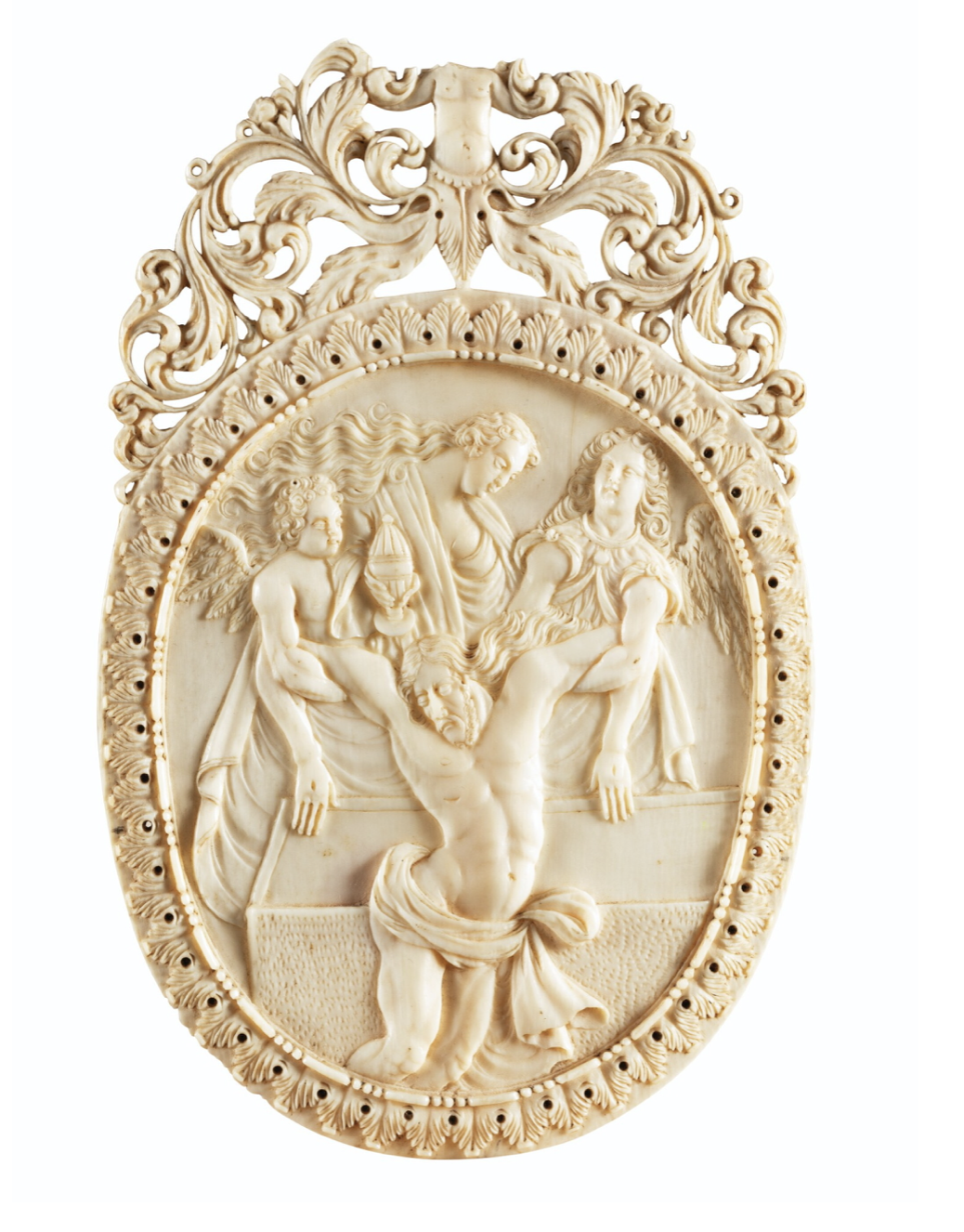
Relief portraits and decorative scenes were also carved in ivory or bone. The French coastal town of Dieppe had a long-established carving tradition and became an important European centre for such work.
Although carving had been practised there for centuries, the production of jewellery and small personal objects expanded during the nineteenth century. Brooches, pendants and portrait medallions were carved in low or high relief and sold throughout Europe, with Britain forming an important market.
Niello
Niello is a decorative technique that can resemble black champlevé enamel, although the dark material is not glass.
A metallic sulphide mixture—traditionally containing silver, copper, lead and sulphur—was ground into a powder and placed into engraved or recessed designs on a metal object. It was then heated until the mixture fused into the recesses. After cooling, the surface was polished so that the black design lay level with the surrounding metal.
The strong contrast between the dark niello and bright silver or gold made the technique particularly effective for detailed ornament, inscriptions and pictorial scenes.
Japanese Influence
In 1854, the Convention of Kanagawa opened Japanese ports to the United States and marked the beginning of the end of the Tokugawa policy of restricted foreign contact. Japan had not been entirely unknown to Europe: Dutch merchants had maintained limited trade through the island of Dejima at Nagasaki. Nevertheless, the opening of additional ports greatly increased Western access to Japanese art and material culture.
During the 1850s and 1860s, imported prints, ceramics, lacquer, metalwork and textiles introduced European designers to unfamiliar approaches to composition, pattern and subject matter. The influence became especially powerful after international exhibitions in London and Paris, developing into the fashion later known as Japonisme.
Japanese influence on European jewellery was therefore only beginning around 1860 and became much more visible during the later nineteenth century. Designers adopted asymmetrical compositions, strong silhouettes, natural motifs and new combinations of colour and material. Cranes, butterflies, fish, bamboo, water lilies and flowers became recurring subjects.
European makers studied imported objects and experimented with techniques associated with Japanese metalwork and enamel. Japanese craftspeople and objects also contributed to technical exchange, although Western workshops generally adapted rather than simply reproduced Japanese methods.
Mokume-Gane
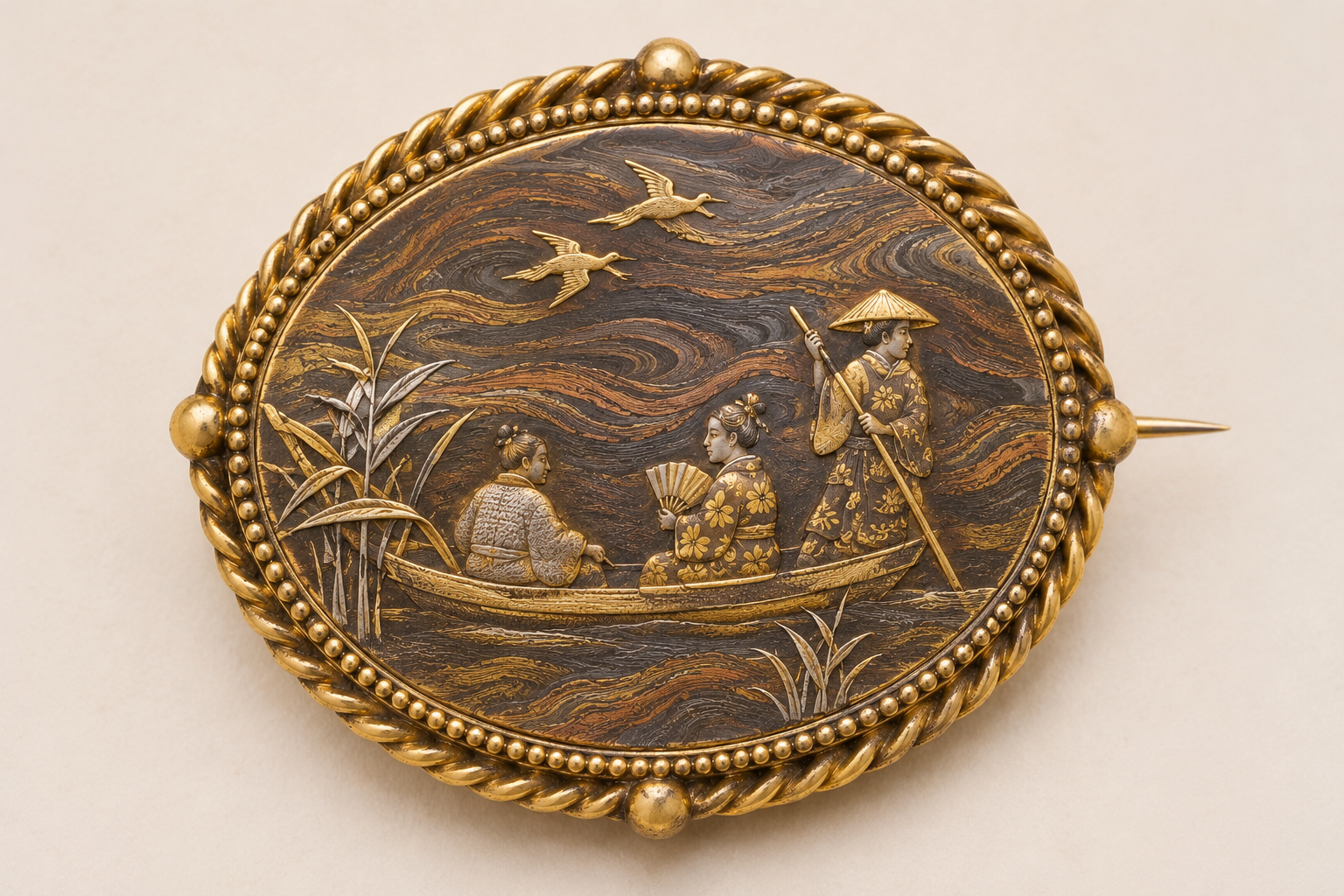
Mokume-gane means ‘wood-grain metal’. The technique developed in Japan during the Edo period and was originally associated with decorative fittings for swords.
Multiple layers of differently coloured metals or alloys are stacked and fused under carefully controlled heat and pressure. The bonded block is then carved, drilled, chiselled, hammered or forged so that the different layers appear at the surface in flowing patterns resembling wood grain.
Traditional combinations often included copper alloys, silver and gold. Modern makers may use a wider range of metals, including platinum. The process requires great technical control: overheating can melt one alloy before another has bonded, while insufficient heat can cause the layers to separate.
Because of this complexity, mokume-gane was not widely practised in nineteenth-century European jewellery. Its visual character and technical sophistication nevertheless became increasingly admired as European interest in Japanese metalwork grew.
Cloisonné Enamel
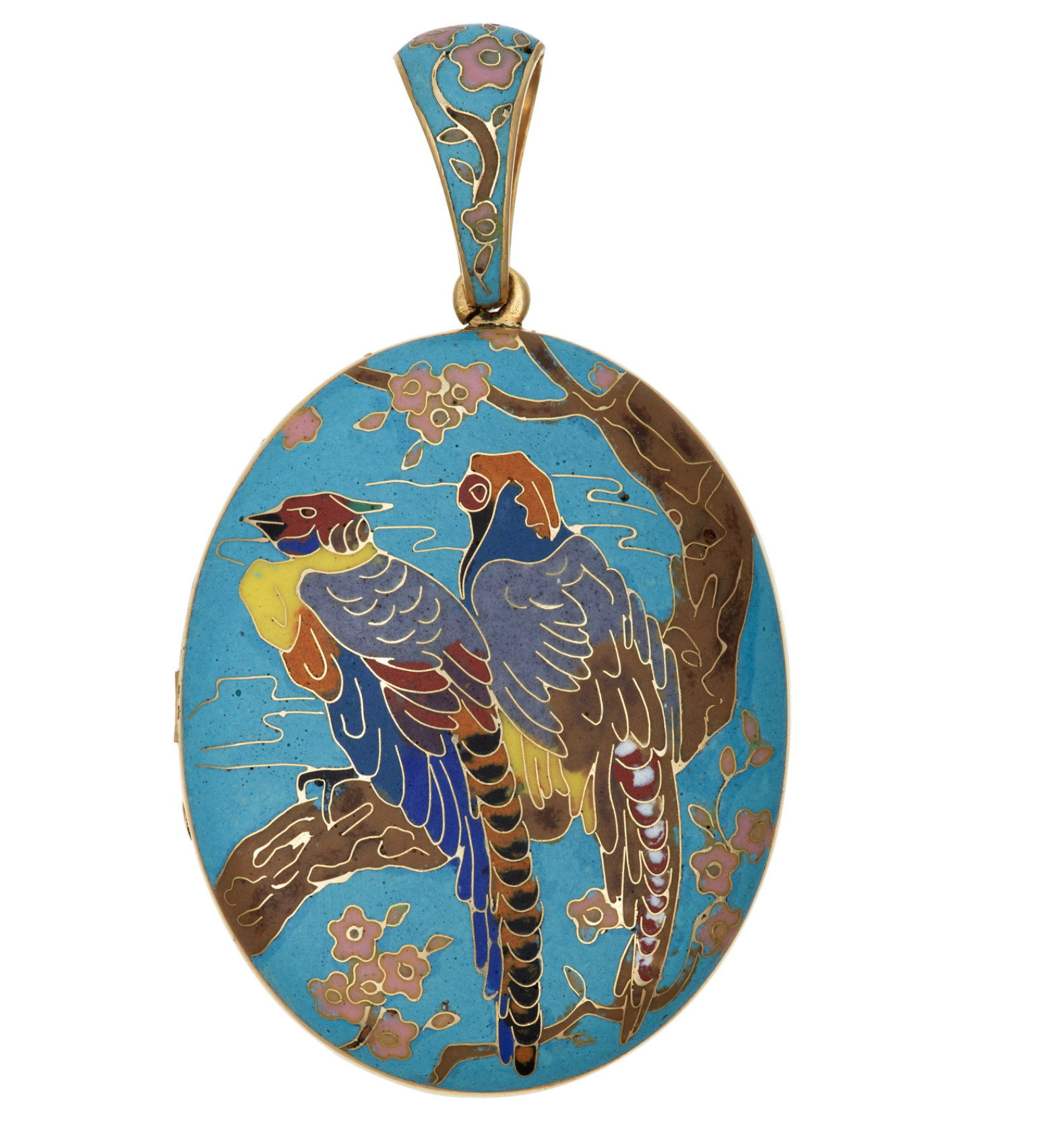
In cloisonné enamel, fine metal wires or narrow strips are soldered to the surface of an object to form small enclosed cells, or cloisons. Coloured enamel paste is placed within these compartments and fired. The surface may then be ground and polished, leaving each area of colour separated by a visible line of metal.
Japanese cloisonné developed into an important export art during the second half of the nineteenth century. Motifs such as lotus flowers, bamboo, cranes, butterflies and fish among water lilies appealed strongly to European consumers.
Parisian jewellers were among the designers who adapted these visual and technical influences. Alexis Falize, and later his son Lucien, became particularly associated with richly coloured enamel jewellery inspired by Japanese art. The firm’s Japanese-style pieces belong chiefly to the later nineteenth century, when Japonisme had become a major force in European design.
