Complete Victorian Jewellery Guide
Part 2 of 3
European Fashion and Jewellery, 1860-1880
During the 1860s and 1870s, fashionable dress became increasingly elaborate and individualised. The cage crinoline reached its greatest width during the early 1860s. Although it was lighter than the multiple petticoats it replaced, the largest examples could make doorways and other narrow spaces difficult to negotiate.
From the middle of the decade, the fashionable silhouette began to change. The front of the skirt became flatter, while the fullness gradually shifted towards the back. By the 1870s, the circular crinoline had largely given way to the bustle, which supported elaborate drapery behind the waist.
Corsets continued to shape the torso and emphasise the waist. Tighter lacing did occur, particularly as skirts became narrower, but extreme tight-lacing was not universal. In the early 1860s, much of the impression of a very small waist was created by the contrast with the exceptionally wide skirt.
Complete matched sets of jewellery, known as parures, continued to be worn at court and on important formal occasions. For ordinary evening and daytime wear, however, smaller matching groups and individual jewels became increasingly fashionable. A pair of earrings might be combined with a brooch, while two similar bracelets could be worn as a balanced pair.
Mid-Victorian Jewellery and Mourning, 1860-1880
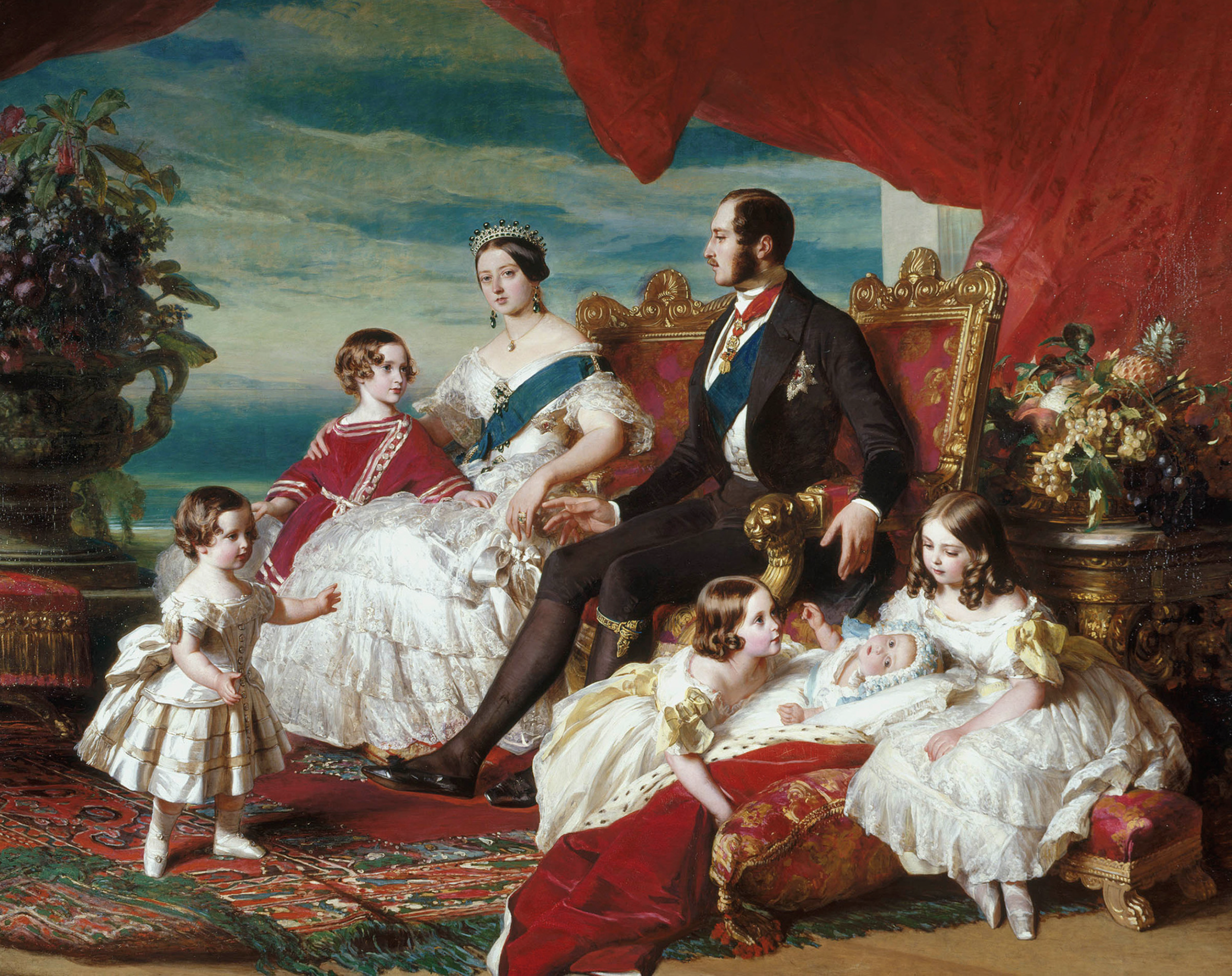
Prince Albert, Queen Victoria's husband, died in 1861. Victoria adopted mourning dress and continued to wear it for the rest of her life. Her example had an enormous influence on court etiquette, fashion and the jewellery worn throughout Britain and far beyond.
Across the Atlantic, the American Civil War of 1861-1865 brought widespread bereavement. Many middle- and upper-class American women followed established mourning conventions that were closely related to British and European practice.
Mourning jewellery was not a Victorian invention. Memorial rings and other jewels had been worn for centuries, and instructions for the purchase of mourning rings appeared in wills from at least the sixteenth century. During the early nineteenth century, however, industrial production made personalised mourning jewellery available to a much broader section of society.
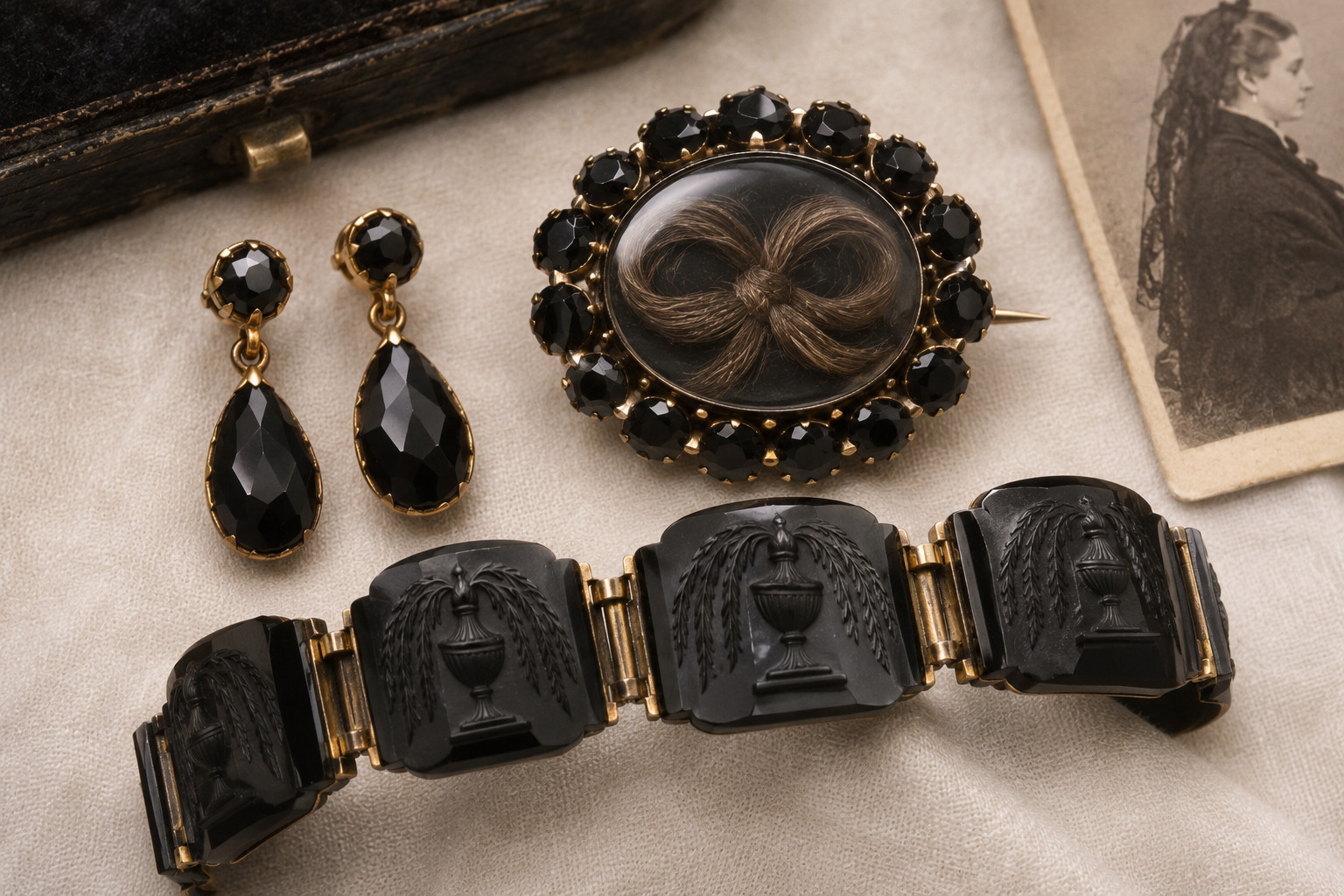
One of the materials most closely associated with Victorian mourning is Whitby jet. Jet is an organic gemstone formed from fossilised wood that has been compressed over millions of years. It could be carved, polished to a brilliant shine or left with a subdued matt surface, making it particularly suitable for the different stages of formal mourning.
Whitby in North Yorkshire had a long tradition of working jet. By about 1850, the town supported around fifty jet workshops. During the industry's height in the 1860s and 1870s, more than two hundred workshops employed approximately 1,500 people. Queen Victoria's use of jet after Albert's death encouraged demand, while the growth of railway tourism also made Whitby jet an increasingly popular souvenir.
Genuine jet was accompanied by a range of less expensive black materials and imitations. These included black glass, often called French jet, as well as black enamel, vulcanite or ebonite, dark bog oak and black onyx.
Many mourning jewels also incorporated human hair. It might be placed beneath glass, braided around the band of a ring or woven into necklaces, bracelets and watch chains. Specialist hair workers could also create remarkably detailed miniature scenes, including urns, tombs and weeping willows. Hair jewellery was not exclusively connected with death: the hair of a living partner, child or friend could also be used as a deeply personal token of affection.
Formal mourning customs gradually became less rigid towards the end of the nineteenth century. They continued into the early twentieth century, but changing social conventions and the unprecedented scale of bereavement during the First World War accelerated the decline of elaborate mourning dress and jewellery.
Jewellery Styles
Alongside mourning jewellery, the Etruscan Revival remained highly fashionable. Archaeological discoveries had encouraged jewellers to study ancient goldwork, and nineteenth-century designers reinterpreted Etruscan forms through granulation, filigree, beading and richly textured gold surfaces.
Brooches were often designed as large circular or oval ornaments, sometimes centred with clusters of turquoise, garnet or coral. Earrings could be long and articulated, with a smaller upper section supporting a vase-shaped or amphora-shaped pendant. Fine chains, beads or strands of gold might move freely beneath the principal ornament.
Bracelets offered less space for suspended decoration, but their broad surfaces could be richly ornamented with granulation, wirework and coloured stones such as garnet, coral and turquoise.
Stars and crescents were also important motifs during the second half of the nineteenth century. They appeared as brooches, pendants and hair ornaments and could be set with diamonds, pearls, coloured gemstones or paste. Some examples were further decorated with white, blue or black enamel.
Brazilian or Snake Chains, from c. 1860
The Brazilian chain, often described as a type of snake chain, was constructed from numerous closely fitted S-shaped or curved components. Together they formed a smooth, flexible surface that moved in a manner reminiscent of snakeskin.
Chains of this kind were made as necklaces, bracelets and watch chains. Their dense construction gave them a substantial appearance while allowing the chain to remain supple. They could be worn alone or finished with a slider, tassel, locket or other pendant.
Reverse Crystal Intaglios, from c. 1860
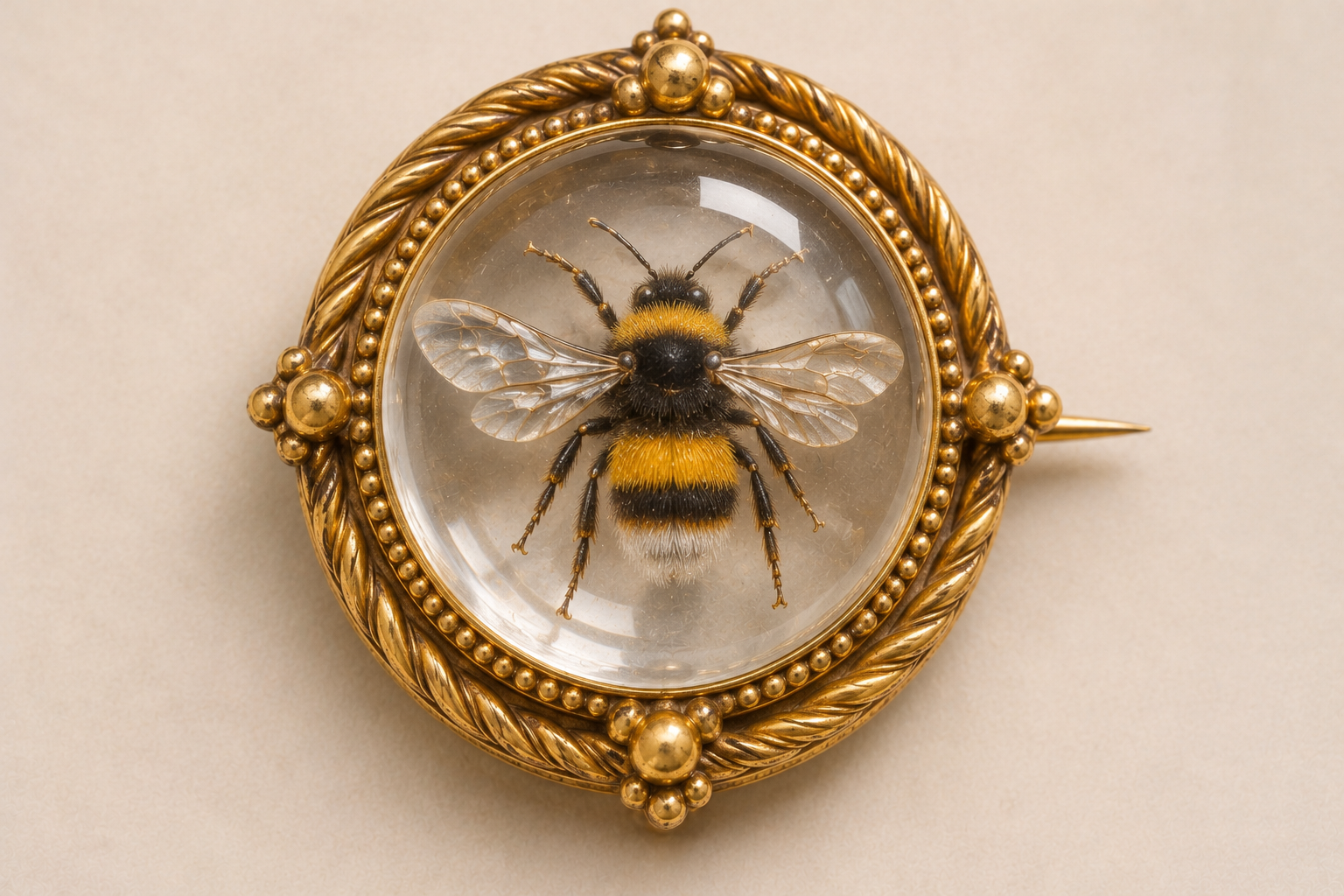
Reverse crystal intaglios became fashionable during the second half of the nineteenth century. The Victorian form of the technique is generally associated with work produced in Belgium from around 1860 and was subsequently developed in England by craftsmen including Thomas Cook, who made crystals for the firm of Lambeth & Co.
A design was carved into the flat reverse of a polished cabochon of rock crystal. The recessed image was then painted from the back, using extremely fine brushes and working in reverse order. When viewed through the rounded front of the crystal, the image appeared three-dimensional and protected beneath the surface.
The painted carving was usually sealed with a backing of gold, silver or mother-of-pearl. Animals were particularly popular subjects, especially dogs, horses, foxes and game birds. Sporting equipment, flowers, monograms and miniature portraits were also used.
These jewels are sometimes called Essex crystals, although the term is misleading: the English miniaturist William Essex was not responsible for the technique. Less expensive examples were made in glass and can generally be recognised by their coarser cutting, painting and overall finish.
Sporting Jewellery, from the 1860s
Sporting jewellery became increasingly popular as the growing middle and upper-middle classes gained more leisure time and disposable income. A small jewel could communicate the wearer's interests, social life or favourite pastime without the need for words.
Riding, hunting and horse racing were among the most common themes. Tie pins, brooches, cufflinks and bracelets were decorated with riding boots, crops, caps, horseshoes, saddles, hounds and horses. Later in the century, motifs associated with tennis, cricket, golf and other organised sports also appeared.
The fashion was particularly strong in Britain, but it soon spread to France, Belgium, the Netherlands and other parts of Europe.
Sentimental Jewellery: REGARD, AEI, REMEMBER and MIZPAH
Sentimental and commemorative jewellery remained extremely popular throughout the Victorian period. Although many of these jewels were made in Britain, the English words and symbols used on them were also adopted in continental Europe and were not always translated.
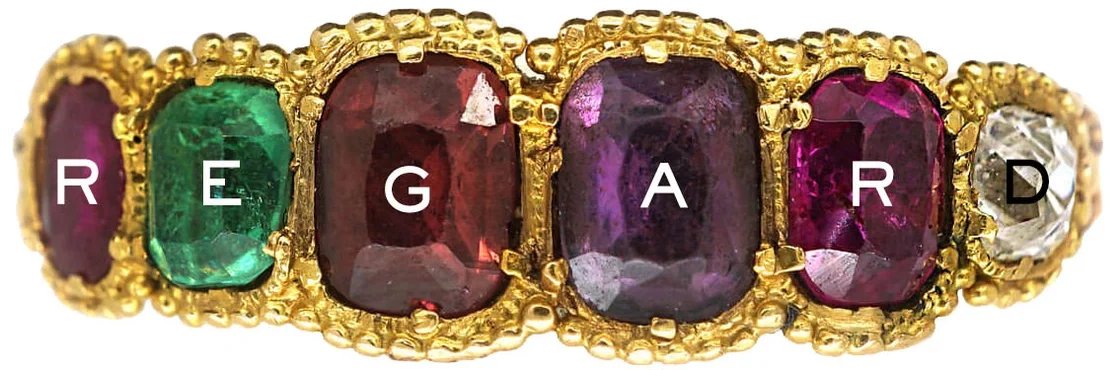
Acrostic jewellery conveyed a hidden word through the first letter of each gemstone's English name. A REGARD jewel, for example, could be set with a ruby, emerald, garnet, amethyst, ruby and diamond. Other popular acrostics included DEAREST and LOVE.
Some jewels carried their message more directly through inscriptions such as REMEMBER or REMEMBER ME. Clasped hands, hands holding a heart and intertwined hearts were older symbols that continued to represent affection, loyalty, friendship and marriage.
MIZPAH jewellery referred to the biblical passage traditionally translated as: 'The Lord watch between me and thee, when we are absent one from another.' It was therefore particularly suited to couples, relatives or friends who expected to spend time apart.
The entwined letters AEI were also used on lockets and memorial jewels. They were commonly interpreted as Amity, Eternity and Infinity, expressing a bond intended to endure beyond separation and death.
The Suez Canal and Egyptian Revival Jewellery
Interest in ancient Egypt had influenced European art and design since the late eighteenth century, but a renewed wave of Egyptomania developed during the middle decades of the nineteenth century. Archaeological discoveries, publications and international exhibitions made Egyptian objects and imagery increasingly familiar to the European public.
Construction of the Suez Canal began in 1859 and continued until its opening in 1869. Egypt was also prominently represented at the Paris Exposition Universelle of 1867. These events kept the country in the public eye and helped strengthen the fashion for Egyptian Revival design.
Jewellers used motifs including scarabs, lotus flowers, sphinxes, winged sun discs, falcons and stylised hieroglyphs. Some pieces closely followed archaeological models, while others freely combined Egyptian ornament with contemporary nineteenth-century forms.
The finest examples were made in gold and enriched with enamel, turquoise, rubies and other gemstones. More affordable interpretations were produced in silver, gilt metal and other base materials, allowing the style to reach a much wider audience.
Chinese Influence, 1860-1900
Chinese art had influenced European decorative design for centuries, but the second half of the nineteenth century brought a renewed and more direct interest in Chinese materials and motifs.
In 1860, Anglo-French forces captured Beijing and looted and burnt the imperial Old Summer Palace. Objects taken during the campaign entered European collections and exhibitions. This history is now inseparable from the colonial violence through which many of these works reached Europe, but at the time the unfamiliar forms, materials and techniques had a significant impact on European taste.
The Paris Exposition Universelle of 1867 further exposed visitors to the decorative arts of China and other parts of Asia. European jewellers began incorporating jade, dragons, bats, cloud patterns, archaic forms and other East Asian references into their designs.
The French goldsmith Eugene Fontenay was among the leading jewellers to experiment with historical and international sources. His work shown around the time of the 1867 exhibition included gold and jade jewels, illustrating the growing European enthusiasm for Asian materials.
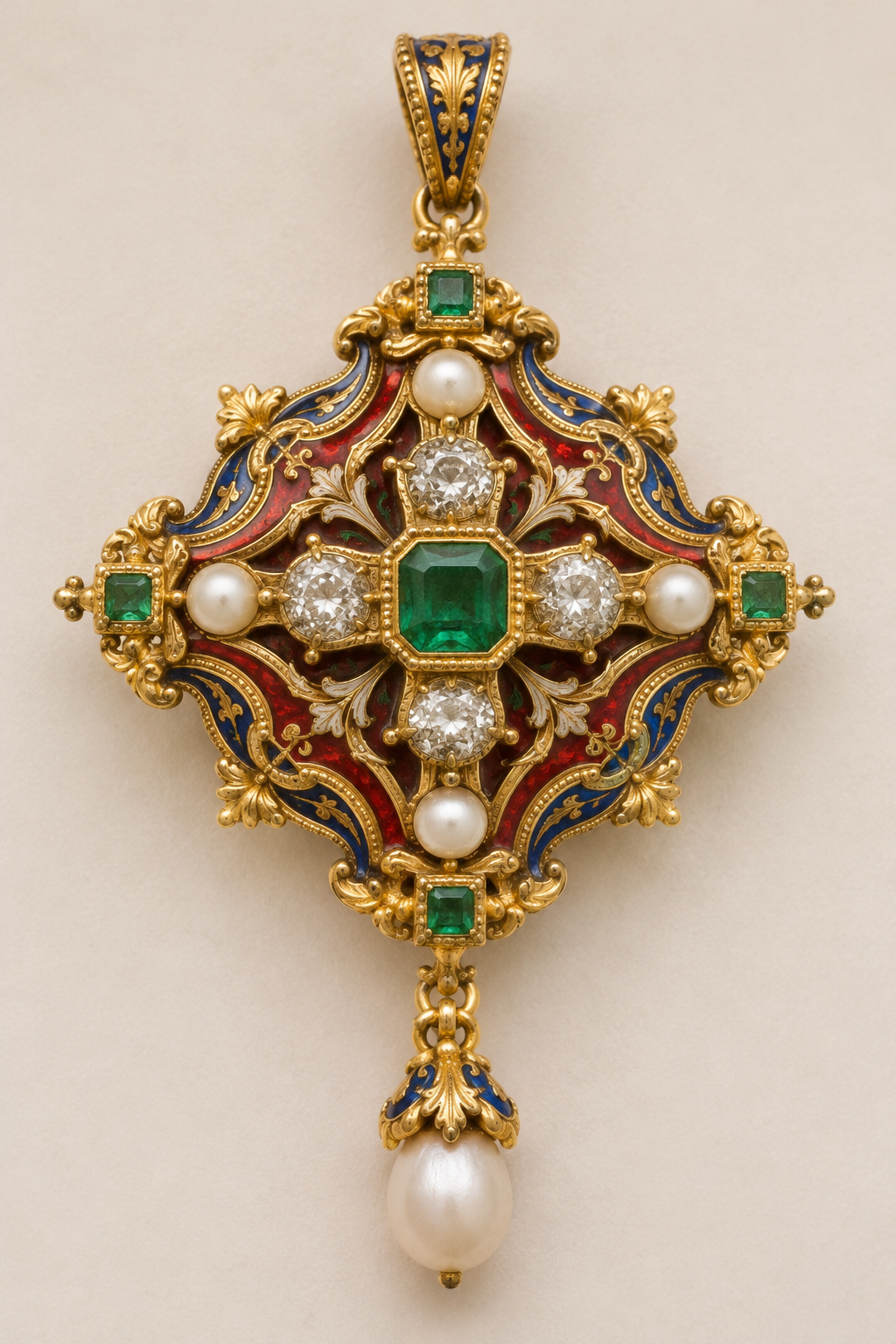
Holbeinesque Jewellery
The term Holbeinesque means 'in the manner of Holbein'. It refers to a nineteenth-century Renaissance Revival style inspired by the jewellery shown in Tudor court portraits and by designs associated with Hans Holbein the Younger, the German-Swiss artist who worked at the court of Henry VIII during the sixteenth century.
Holbeinesque jewellery became particularly fashionable in Britain from the 1860s onwards. Pendants and brooches were usually arranged around a prominent central gemstone, often an oval cabochon garnet, emerald, sapphire or other coloured stone.
The central gem was surrounded by richly coloured polychrome enamel, smaller gemstones, pearls or diamonds. Many pendants ended in a suspended pearl or gem-set drop. The reverse could be elaborately engraved and sometimes contained a glazed compartment for a photograph or lock of hair.
Although the style was named after Holbein, these jewels were nineteenth-century interpretations rather than direct copies of a single Tudor design.
Lava Cameos
The popularity of cameo jewellery created demand for attractive pieces at a more modest price. Italian carvers, particularly those working in and around Naples, produced cameos from soft materials commonly marketed as 'lava'. These could include volcanic or talc-like stones in shades of grey, brown, beige, green and black.
Their association with Vesuvius, Pompeii and the Bay of Naples made lava cameos desirable Grand Tour souvenirs. Classical profiles, mythological figures, philosophers and famous Italian writers were among the most common subjects.
The carved plaques were mounted as brooches, earrings, bracelets and necklaces, sometimes forming complete matched sets. Because the material is relatively soft, many surviving examples show chips and wear. Projecting details, particularly noses and curls of hair, were especially vulnerable to damage.
Scottish Jewellery or 'Scottish Pebble' Jewellery
Scottish pebble jewellery was another important fashion of the Victorian period. It incorporated banded agates, jaspers, quartz and citrine associated with the Scottish landscape. These stones were cut into panels and mounted in brooches, bracelets, buckles, earrings and necklaces.
Designs frequently included Scottish motifs such as the thistle, the dirk and stylised Celtic ornament. Queen Victoria and Prince Albert's enthusiasm for Scotland, together with their purchase of Balmoral Castle and the growth of Scottish tourism, greatly encouraged the popularity of the style.
The demand for Scottish stones eventually exceeded the available local supply. As a result, some jewellery sold as Scottish pebble work was made with imported agates, particularly stones cut in Germany, even when the finished jewel itself was produced in Britain.
Indian Influence and Victoria as Empress of India, 1876-1877
Queen Victoria was not crowned Empress of India. The title was formally added to her royal style in 1876 under the Royal Titles Act and was publicly proclaimed at the Delhi Imperial Assemblage, or Delhi Durbar, on 1 January 1877.
Interest in Indian art and jewellery had already been growing through colonial trade, museum collections and international exhibitions. The Prince of Wales's tour of India in 1875-1876 brought a further influx of Indian gifts, weapons, jewellery and decorative objects to Britain.
Indian materials and motifs increasingly influenced European fashion. Tiger claws, for example, were mounted in gold as brooches, pendants and earrings. In India, tiger-claw ornaments had long-standing talismanic associations with strength and protection; in Britain they were also collected and worn as colonial souvenirs.
Traditional Indian techniques such as kundan setting and enamelling continued to be practised by specialist workshops and remain in use today. Many nineteenth-century jewels were made in India for local clients or for export, while European jewellers also adapted Indian forms and materials to Western tastes. For this reason, the relationship between Indian jewellery and European Indian-inspired jewellery is more complex than a simple fashion for copied designs.
