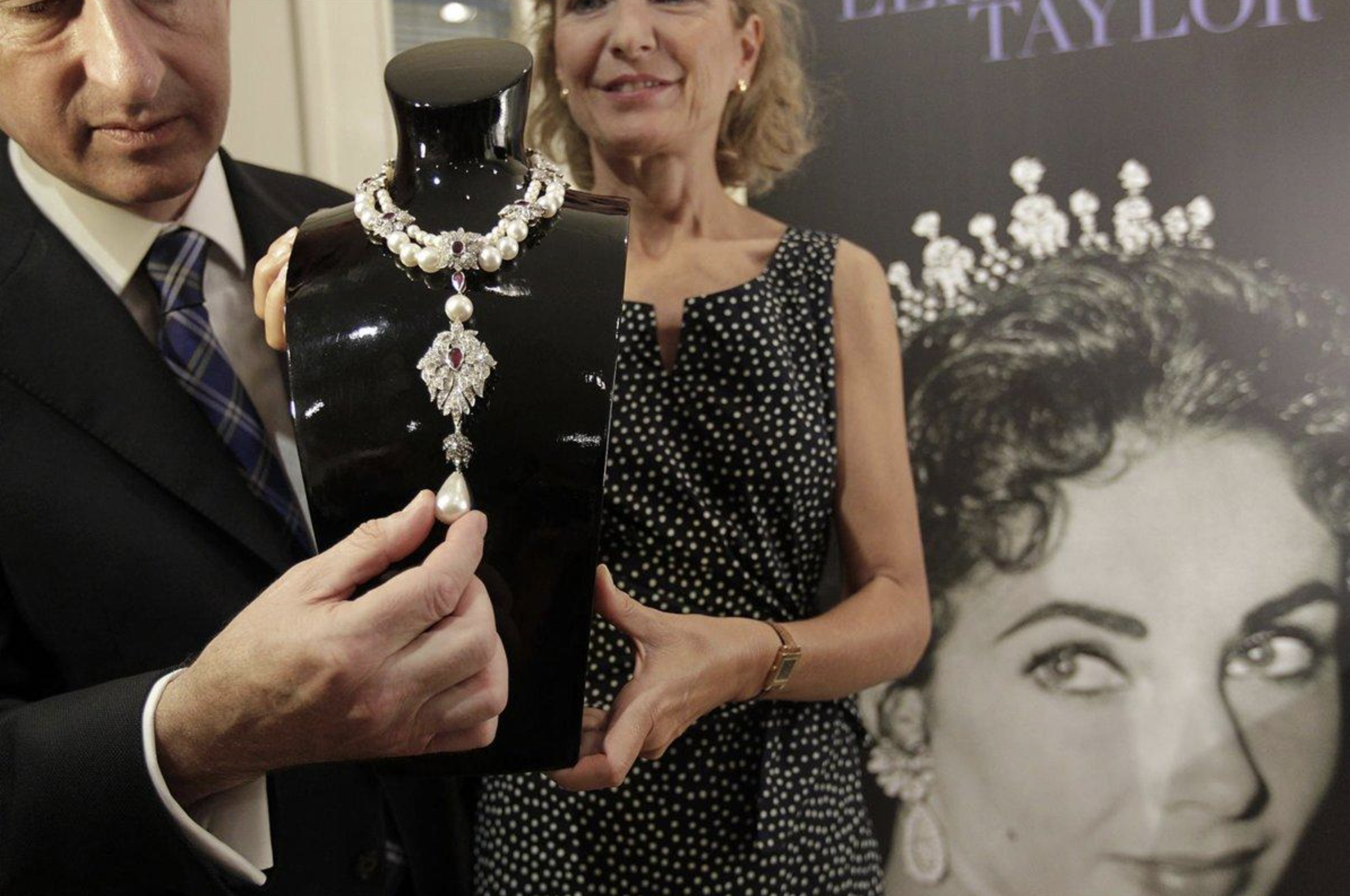
From the Pearl Fisheries of Panama to Elizabeth Taylor’s Puppy
Few jewels have travelled as far—or been lost as often—as La Peregrina.
The extraordinary natural pearl began its recorded life in the dangerous pearl fisheries of sixteenth-century Panama. It became one of the most important jewels of the Spanish Crown, appeared in portraits of queens and kings, disappeared during the Napoleonic occupation of Spain and spent more than a century with a British aristocratic family.
It was then purchased by Richard Burton for Elizabeth Taylor, who nearly lost it within minutes of receiving it. After surviving royal courts, political upheaval and several previous disappearances, the pearl was found in the mouth of one of her puppies.
A Pearl from the Gulf of Panama
La Peregrina was discovered in the Gulf of Panama in 1577, during a period when the waters around Panama’s Pearl Islands were among the most important sources of natural pearls in the world.
Pearl fishing was extremely dangerous work. Enslaved African divers were forced to descend repeatedly without modern breathing equipment, searching the seabed for oysters. The archival record describes the discovery of an exceptionally large, pear-shaped pearl by one of these young enslaved divers. His name does not appear to have survived.
A popular version of the story says that the diver was granted his freedom as a reward. That detail has been repeated for generations, although it is less securely documented than the discovery itself. What is certain is that colonial officials immediately recognised the pearl as something exceptional and reported it to the Spanish authorities.
Unlike a gemstone cut from a much larger crystal, a natural pearl emerges from its oyster already formed. La Peregrina’s remarkably regular drop shape, fine surface and large size made it extraordinary from the moment it was found.
Today, after centuries of mounting and remounting, it weighs approximately 50.56 carats and measures about 25.5 millimetres in length. In 2011, the Swiss Gemmological Institute confirmed that it is a natural saltwater pearl.
Why It Was Called La Peregrina
The pearl’s name is often translated as “the pilgrim” or “the wanderer”, an interpretation that seems particularly appropriate considering its later travels.
Recent archival research, however, offers a slightly different explanation. The Milanese court jeweller and lapidary Jacopo da Trezzo reportedly called it La Perla Peregrina in the Renaissance sense of something rare, extraordinary or singular—not necessarily because it had already travelled from owner to owner.
The name therefore originally referred to the pearl’s exceptional beauty. Only later did “the wanderer” become an equally fitting description of its remarkable journey.
A Pearl Coveted by Emperors
The pearl attracted interest from some of Europe’s most powerful collectors. The Holy Roman Emperor Rudolf II reportedly desired it, but it was Philip II of Spain who finally acquired it in 1586.
Philip paid the astonishing sum of 9,000 ducats. A recent historical comparison notes that this was approximately three times the amount Michelangelo received for painting the ceiling of the Sistine Chapel. Whether measured in money, status or symbolism, La Peregrina was already far more than an attractive pearl.
Before his death in 1598, Philip II decreed that the pearl should remain an inalienable part of the Spanish Crown Treasury. It was not intended to become the private property of any individual queen. Instead, it was to pass from one reign to the next as a symbol of dynastic continuity and Spanish imperial power.
The Rich Jewel of the Spanish Court
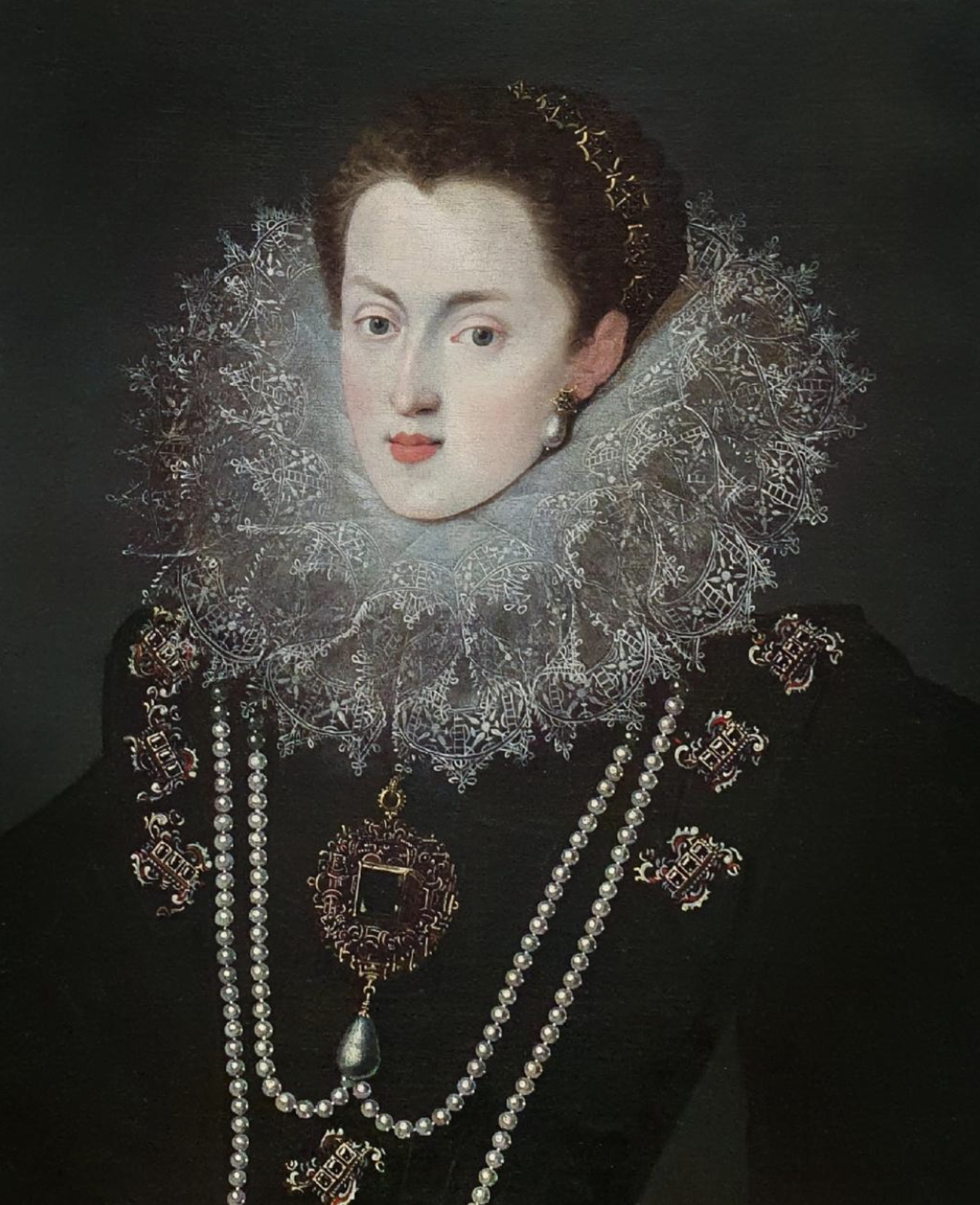
At the Spanish court, La Peregrina was frequently combined with another celebrated Crown jewel: the large table-cut diamond known as El Estanque, or “The Pool”.
Together they formed the Joyel Rico, the “Rich Jewel”. The diamond appeared above, while La Peregrina hung below as a magnificent pearl drop. This combination became one of the most recognisable royal jewels of Habsburg Spain.
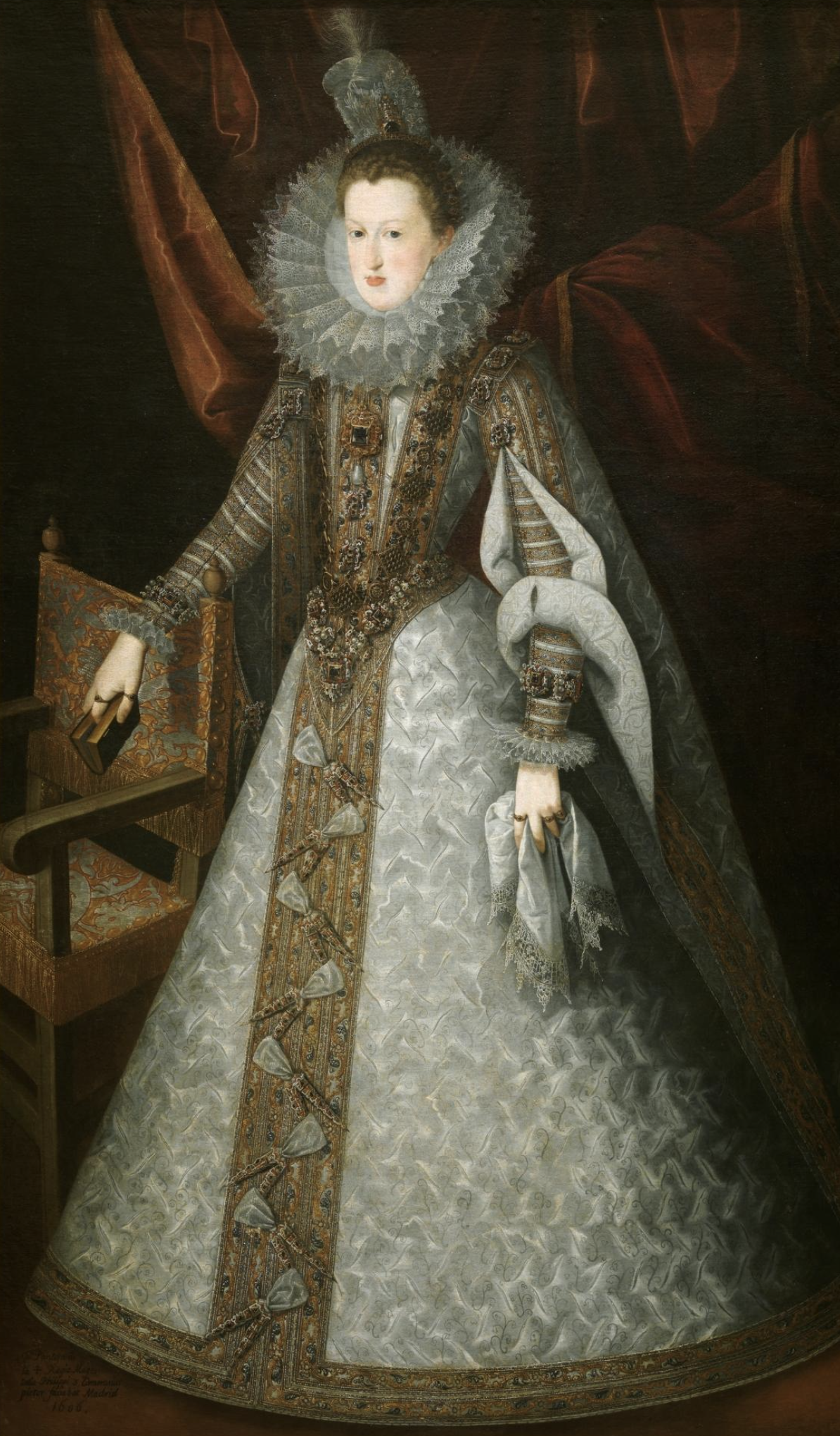
The jewel can be seen prominently in Juan Pantoja de la Cruz’s 1606 portrait of Queen Margaret of Austria, wife of Philip III. Against her elaborate dress and lace ruff, the large diamond and pearl occupy a central position on her body. They were not simply decorative; they communicated legitimacy, wealth and Spain’s global reach.
Over the following two centuries, La Peregrina appeared in numerous court portraits and was worn by successive Spanish queens, princesses and sometimes kings. Artists including Pantoja de la Cruz, Velázquez and Goya helped transform it into one of the most visually documented jewels in European royal history.
The Queen Who Almost Certainly Never Wore It
For many years, one of the best-known stories about La Peregrina claimed that Philip II gave it to Mary I of England as a wedding present in 1554.
Portraits of Mary show her wearing an enormous drop-shaped pearl beneath a diamond jewel. Because she married Philip II, it seemed natural to assume that this was La Peregrina. Older catalogues and popular histories repeated the identification, and even museums once described the portrait pearl as possibly being the famous Spanish jewel.
The dates, however, do not work.
Mary died in 1558, while the latest archival research places La Peregrina’s discovery in Panama in 1577 and its acquisition by Philip II in 1586. The pearl worn by Mary was a different jewel, generally identified today as the Tudor Pearl.
This historical confusion later produced a wonderful modern anecdote. Richard Burton and Elizabeth Taylor acquired a portrait of Mary I by Hans Eworth because they believed the queen was wearing their pearl. Subsequent research revealed that their romantic connection to Mary Tudor was based on a mistaken identification.
As one art-historical account neatly concludes: Elizabeth Taylor certainly wore La Peregrina; Mary Tudor did not.
The Pearl Leaves Spain
La Peregrina remained associated with the Spanish Crown for more than two centuries. Its position changed dramatically after Napoleon invaded Spain and placed his elder brother, Joseph Bonaparte, on the Spanish throne in 1808.
During the occupation, Joseph gained control of many royal possessions. Contemporary correspondence indicates that Spanish Crown jewels were transferred, pledged or sold as he struggled to finance his government and the French military presence. La Peregrina was among the treasures sent away from Madrid.
When Joseph abandoned Spain permanently in 1813, the pearl disappeared from the Spanish Royal Palace with him. Later provenance records place it first with Joseph Bonaparte and then with Louis-Napoléon Bonaparte, the future Napoleon III. The precise private transfer between members of the Bonaparte family remains less clear than the pearl’s earlier royal history.
By approximately 1848, La Peregrina had been sold to James Hamilton, Marquess of Abercorn and later the first Duke of Abercorn. He acquired it for his wife, Louisa.
Lost at Windsor and Buckingham Palace
La Peregrina’s tendency to escape its setting apparently began long before Elizabeth Taylor owned it.
According to Abercorn family tradition, Louisa nearly lost the pearl on two separate occasions. On one occasion, it disappeared into the upholstery of a sofa at Windsor Castle. On another, it came loose during a ball at Buckingham Palace.
One version of the Buckingham Palace story says that the pearl was eventually spotted caught in the velvet train of another woman’s dress. The details vary between retellings, but the episodes help explain why the jewel’s reputation as “the wanderer” became so appealing.
The pearl remained with the Abercorn family for more than a century. By then, it had acquired not only royal provenance but also the romance of a jewel that seemed determined to disappear.
Richard Burton Enters the Auction
On 23 January 1969, La Peregrina was offered at Parke-Bernet Galleries in New York.
At that time, it hung from an early nineteenth-century diamond bail on a relatively delicate chain. It had not yet been incorporated into the elaborate Cartier necklace by which it is now best known.
Richard Burton bid anonymously by telephone. Reports from the sale described another determined bidder as a Spanish prince or member of the Spanish royal family, although the exact identity and status of this rival bidder have since been questioned.
Burton won the pearl for $37,000 and presented it to Elizabeth Taylor as a Valentine’s Day gift. It was an ideal gift for an actress whose love of historic jewellery was matched by her fascination with the people who had previously owned it.
Taylor did not simply view jewellery as decoration. She enjoyed provenance, character and storytelling. La Peregrina gave her all three: it connected the pearl fisheries of the Spanish Americas, the portraits of Habsburg queens, the Napoleonic occupation and the private world of British aristocracy.
Burton, meanwhile, appears to have been almost as captivated by the history as Taylor was. His acquisition of the Mary I portrait demonstrates how enthusiastically the couple immersed themselves in the legends surrounding the pearl—even when those legends later proved incorrect.
Elizabeth Taylor Loses La Peregrina
Shortly after receiving the pearl, Taylor was wearing it in a hotel suite with Burton nearby.
She instinctively reached down to touch it and discovered that the pearl was no longer hanging from its chain.
Trying not to alert Burton, she went into the bedroom and began retracing every step. She searched the bed, removed her slippers and socks and examined the carpet on her hands and knees. Nothing appeared.
She then realised that the pearl must be somewhere in the living room—in full view of Burton. Taylor feared he would be furious, not only because of the money but because he already understood the pearl’s historic importance.
As she searched, Taylor noticed that one of her puppies appeared to be chewing something.
Trying to remain calm, she opened the dog’s mouth. Inside was La Peregrina.
The pearl had survived centuries of dynastic marriages, imperial politics, a Napoleonic invasion and two earlier disappearances in British royal palaces. It had now come dangerously close to becoming a puppy’s chew toy.
Remarkably, Taylor said it emerged without a scratch.
A New Setting by Cartier
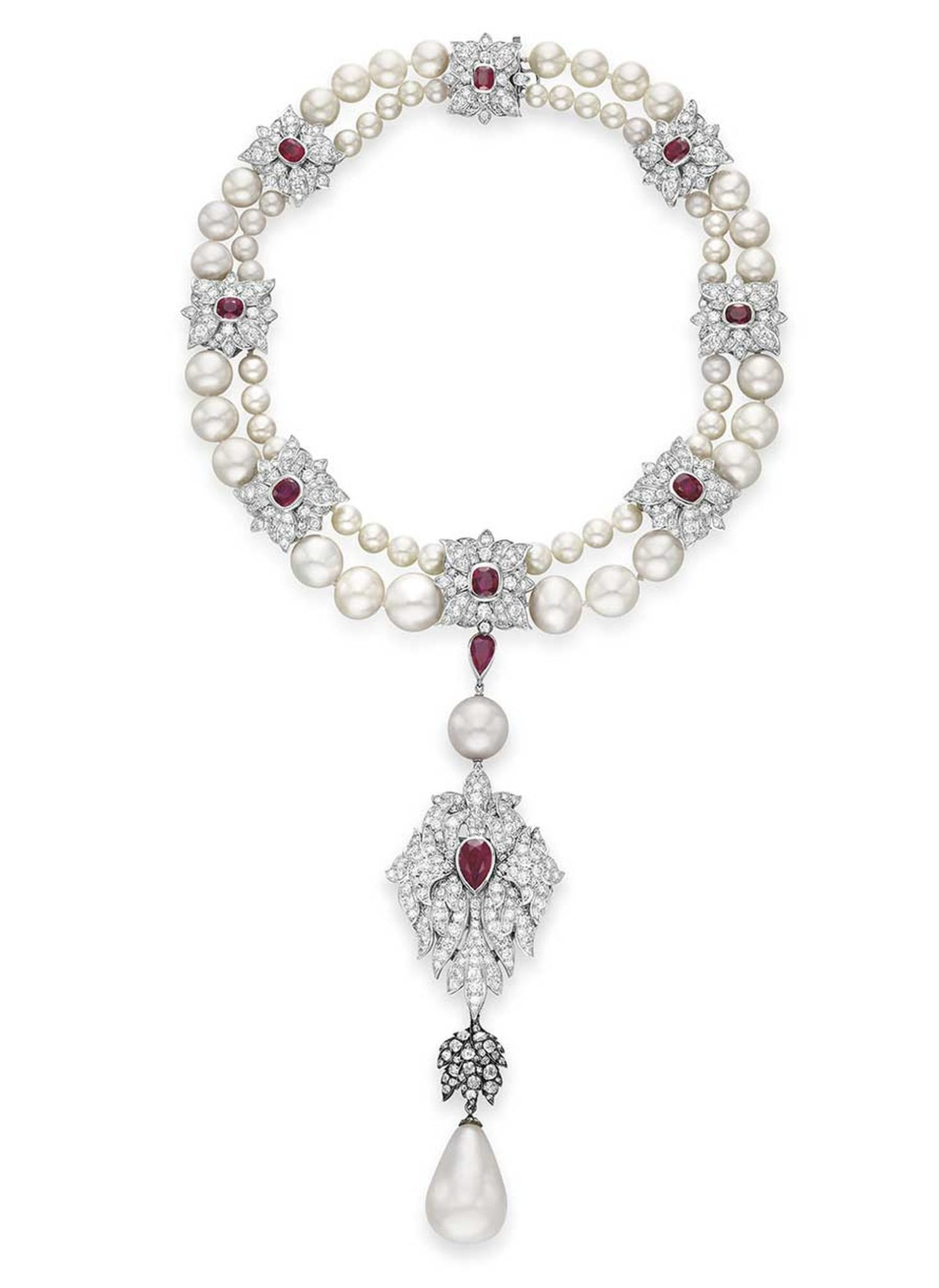
The narrow chain on which Burton bought the pearl clearly offered insufficient security for such a heavy and important jewel. Taylor subsequently collaborated with Al Durante of Cartier to design a much more elaborate necklace, completed in 1972.
The resulting design combined two strands of pearls with diamonds and rich red rubies. La Peregrina remained detachable and was suspended beneath an ornate diamond and ruby arrangement. The composition recalled the elaborate jewels seen in Renaissance and Baroque royal portraiture, while still possessing the theatrical scale suited to Elizabeth Taylor.
Taylor wore the pearl publicly and in film, returning a historic royal jewel to the kind of glamorous visibility it had enjoyed in Spanish court portraits centuries earlier.
The Final Record-Breaking Sale
Elizabeth Taylor retained La Peregrina until her death in 2011.
Later that year, Christie’s offered the Cartier necklace as part of the landmark sale of her jewellery collection. The pearl was estimated at between two and three million dollars, but intense bidding carried the final price to $11,842,500.
At the time, the result established records both for an historic pearl and for a pearl jewel at auction.
The purchaser was not publicly identified. As a result, the present location of La Peregrina is not officially known—an appropriate final mystery for a jewel whose history has always involved travel, disappearance and rediscovery.
Its story stretches from an unnamed enslaved diver in the Gulf of Panama to the most powerful royal court in Renaissance Europe, from the Bonaparte family to British palaces and finally to Hollywood.
Yet perhaps the most memorable moment is also the most intimate: Elizabeth Taylor kneeling on a hotel-room carpet, terrified that she had lost one of history’s greatest pearls, only to discover it safely—but briefly—in the mouth of her puppy.
