The Beginning of the Georgian Era — 1714
7 minute read - 1450 words.
The Georgian era began in 1714, when George I of the House of Hanover ascended the British throne following the death of Queen Anne, the last reigning monarch of the House of Stuart. Born in Germany, George I established a new royal dynasty that would rule Britain throughout much of the eighteenth and nineteenth centuries.
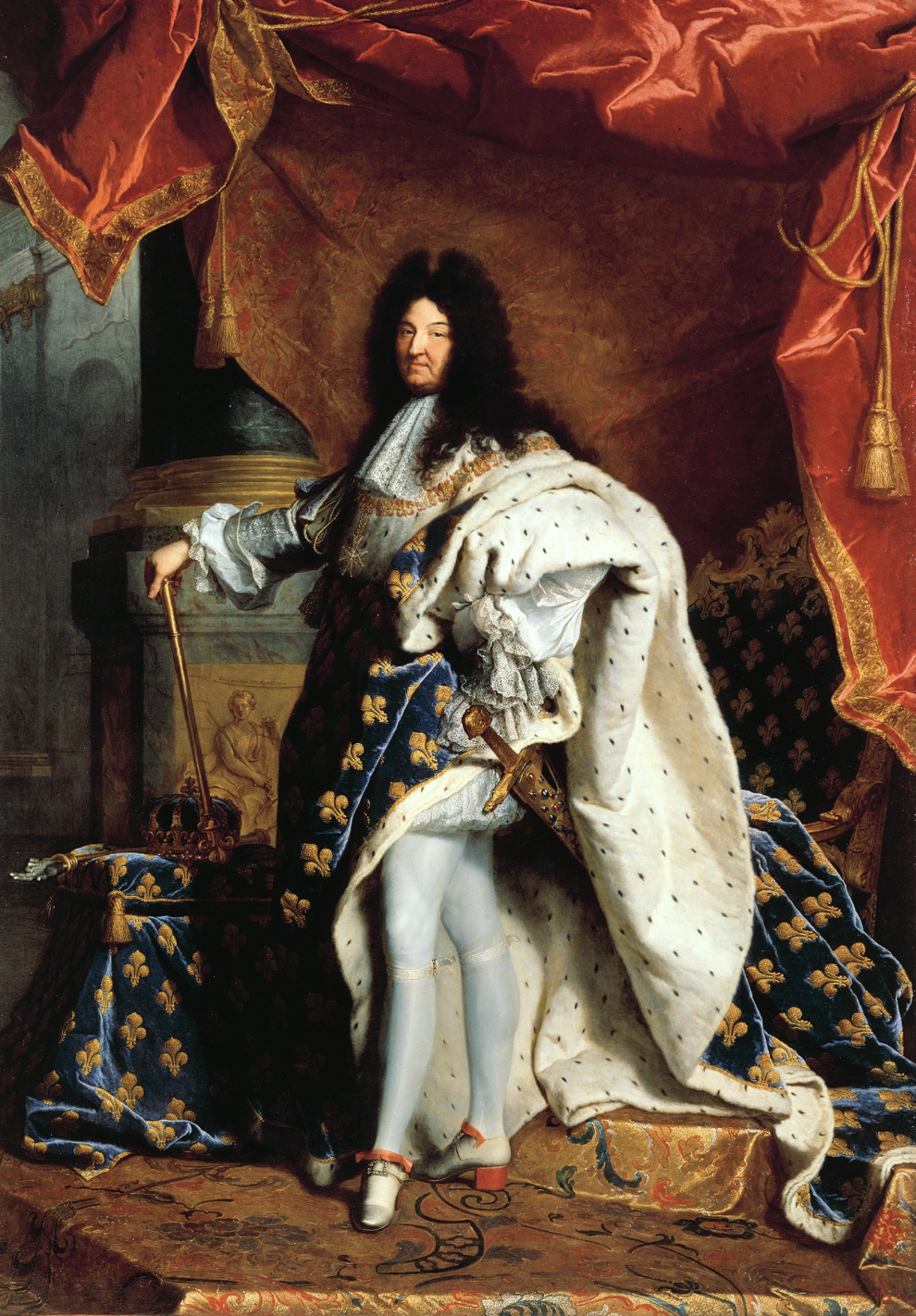
Across the English Channel, France was still ruled by Louis XIV of the House of Bourbon. Known as the Sun King, Louis XIV had transformed the Palace of Versailles into the centre of European courtly fashion and luxury. His extravagant court had established a taste for elaborate clothing, precious gemstones and magnificent jewellery that continued to influence the aristocracy long after his death in 1715.
The British and French royal courts played an important role in shaping European jewellery fashions. Diamonds, pearls and coloured gemstones were symbols of wealth, power and social standing. Court jewellery was commissioned from highly skilled goldsmiths, often using intricate floral designs, bows and elaborate gemstone settings.
George I, George II and Louis XV — 1714–1760
Following the death of Louis XIV in 1715, his great-grandson Louis XV inherited the French throne at just five years old. During his reign, French aristocratic culture became increasingly associated with the elegance and decorative freedom of the Rococo style.
Curving lines, delicate flowers, ribbons and asymmetrical ornamentation appeared throughout French decorative arts, including jewellery. Diamond-set brooches, elaborate earrings and magnificent necklaces became fashionable among wealthy European families.
In Britain, George I was succeeded by his son George II in 1727. During these decades, Britain expanded its commercial influence, while London developed into an increasingly important centre for luxury goods and craftsmanship.
One of the most significant developments in jewellery history occurred during the 1720s, when large diamond deposits were discovered in Brazil. Until then, India had been the principal source of diamonds reaching Europe. The Brazilian discoveries transformed the international diamond trade, supplying new quantities of gemstones to European markets.
Diamonds travelled through Portuguese commercial networks to important trading and cutting centres, including Amsterdam and Antwerp. The increasing availability of diamonds encouraged the production of elaborate diamond jewellery, particularly necklaces, brooches and earrings.
Among the most fashionable creations were girandole earrings, featuring three suspended drops, and rivière necklaces, formed from a continuous line of graduated gemstones.
Many Georgian diamond jewels were mounted in silver over gold. The silver settings complemented the white appearance of the diamonds, while the gold provided strength and a more comfortable surface against the skin.
George III, Louis XVI and Marie Antoinette 1760–1789
In 1760, George III ascended the British throne, beginning a reign that would last sixty years. The following year, he married Charlotte of Mecklenburg-Strelitz, whose interest in music, art and culture helped shape the British royal court.
Meanwhile, France remained under Louis XV until 1774, when his grandson Louis XVI inherited the throne. Louis XVI had married the Austrian archduchess Marie Antoinette in 1770, strengthening the dynastic ties between the French Bourbons and the Habsburgs.
Marie Antoinette became one of the most celebrated figures in European fashion. At Versailles, elaborate dresses, extravagant hairstyles and magnificent jewellery formed part of the public image of the French monarchy. Pearls, diamonds and precious gemstones were frequently incorporated into formal court attire.
During the second half of the eighteenth century, jewellery design gradually moved away from the elaborate curves of Rococo towards the more balanced forms of Neoclassicism.
The archaeological discoveries at Herculaneum and Pompeii renewed European interest in ancient Greece and Rome. Classical motifs such as laurel wreaths, urns, cameos and engraved gemstones became increasingly fashionable.
At the same time, developments in gemstone cutting and jewellery manufacturing expanded the variety of designs available to wealthy clients. Diamond rivière necklaces, detachable earrings, floral ornaments and elaborate brooches remained important pieces of formal jewellery.
Sentimental jewellery also became increasingly popular. Miniature portraits, rings containing woven hair and small lockets allowed people to express affection, friendship and remembrance through personal objects.
Revolution and the Fall of the French Monarchy — 1789–1799
In 1760, George III ascended the British throne, beginning a reign that would last sixty years. The following year, he married Charlotte of Mecklenburg-Strelitz, whose interest in music, art and culture helped shape the British royal court.
Meanwhile, France remained under Louis XV until 1774, when his grandson Louis XVI inherited the throne. Louis XVI had married the Austrian archduchess Marie Antoinette in 1770, strengthening the dynastic ties between the French Bourbons and the Habsburgs.
Marie Antoinette became one of the most celebrated figures in European fashion. At Versailles, elaborate dresses, extravagant hairstyles and magnificent jewellery formed part of the public image of the French monarchy. Pearls, diamonds and precious gemstones were frequently incorporated into formal court attire.
During the second half of the eighteenth century, jewellery design gradually moved away from the elaborate curves of Rococo towards the more balanced forms of Neoclassicism.
The archaeological discoveries at Herculaneum and Pompeii renewed European interest in ancient Greece and Rome. Classical motifs such as laurel wreaths, urns, cameos and engraved gemstones became increasingly fashionable.
At the same time, developments in gemstone cutting and jewellery manufacturing expanded the variety of designs available to wealthy clients. Diamond rivière necklaces, detachable earrings, floral ornaments and elaborate brooches remained important pieces of formal jewellery.
Sentimental jewellery also became increasingly popular. Miniature portraits, rings containing woven hair and small lockets allowed people to express affection, friendship and remembrance through personal objects.
Napoleon and the Return of Imperial Splendour — 1799–1815
Following the political instability of the French Revolution, Napoleon Bonaparte rose to power in 1799. In 1804, he crowned himself Emperor of the French, establishing the First French Empire.
Napoleon understood the importance of art, fashion and jewellery in projecting imperial authority. Together with his first wife, Empress Joséphine, he encouraged a renewed culture of luxury at the French imperial court.
The jewellery of the Napoleonic period reflected the growing popularity of Neoclassical design. Inspired by ancient Greece and Rome, fashionable ornaments incorporated laurel wreaths, classical figures, cameos and symmetrical compositions.
Magnificent parures became particularly important. These matching jewellery suites could include a tiara, necklace, earrings, brooches and bracelets, often designed to be worn together during formal court occasions.
The French imperial court also helped establish the reputation of important Parisian jewellers, including the house of Nitot, founded in 1780 and later known as Chaumet.
Napoleon's military campaigns and political influence spread French fashions throughout much of Europe. After his final defeat at Waterloo in 1815, the Bourbon monarchy returned to France under Louis XVIII.
Although Napoleon's empire had ended, the elegant classical style associated with his reign continued to influence jewellery design for decades.
George IV, the Regency and William IV — 1811–1837
In Britain, George III's declining health led to the appointment of his son, the Prince of Wales, as Prince Regent in 1811. The years that followed became known as the Regency period, celebrated for their distinctive architecture, fashion and decorative arts.
The future George IV was renowned for his extravagant lifestyle and appreciation of beautiful objects. His patronage of craftsmen, jewellers and artists contributed to the refinement of British luxury goods.
When George III died in 1820, the Prince Regent became King George IV. Under his influence, jewellery continued to favour elegant classical forms, decorative gemstones and increasingly sophisticated craftsmanship.
Meanwhile, France experienced another series of political changes. Louis XVIII was succeeded by Charles X in 1824. Following the July Revolution of 1830, the Bourbon Restoration ended and Louis-Philippe of the House of Orléans became King of the French.
That same year, George IV died and was succeeded by his younger brother William IV, the final British monarch of the Georgian period.
During these last decades, coloured gemstones such as garnets, amethysts, topaz and turquoise became increasingly popular in fashionable jewellery. Seed pearls, decorative goldwork and sentimental pieces also remained important.
The development of improved manufacturing techniques gradually changed the jewellery trade, laying the foundations for the much greater production of the Victorian era.
The End of an Era — 1837The Georgian era traditionally comes to an end in jewellery history in 1837, when William IV died and his niece Victoria ascended the British throne.
Over more than a century, European jewellery had evolved from the elaborate diamond ornaments of the Baroque and Rococo courts to the refined classical designs of the Regency period.
Throughout these changing fashions, Georgian jewellery remained closely connected to the lives of European royalty, the discoveries of new gemstone deposits and the remarkable skills of goldsmiths and lapidaries.
Because jewellery was often dismantled and redesigned to suit later generations, relatively few pieces have survived entirely unchanged.
Today, original Georgian jewellery is particularly admired for its individual craftsmanship, historical significance and distinctive character. Each surviving jewel offers a tangible connection to an extraordinary age of European history.
